✨ Introduction
The story of why Chanakya trusted silence over strength is one of the most fascinating wisdom stories from ancient India.
Chanakya, also known as Kautilya, was a brilliant strategist, philosopher, and advisor. His teachings on leadership, patience, and intelligence still guide people today.
Many people believe that strength and force solve problems quickly. However, Chanakya believed something different.
He believed that silence, patience, and strategy can defeat even the strongest force.
This powerful story reveals why Chanakya trusted silence over strength and how his calm decision saved the kingdom from unnecessary conflict.
⚔️ The Rising Conflict in the Court
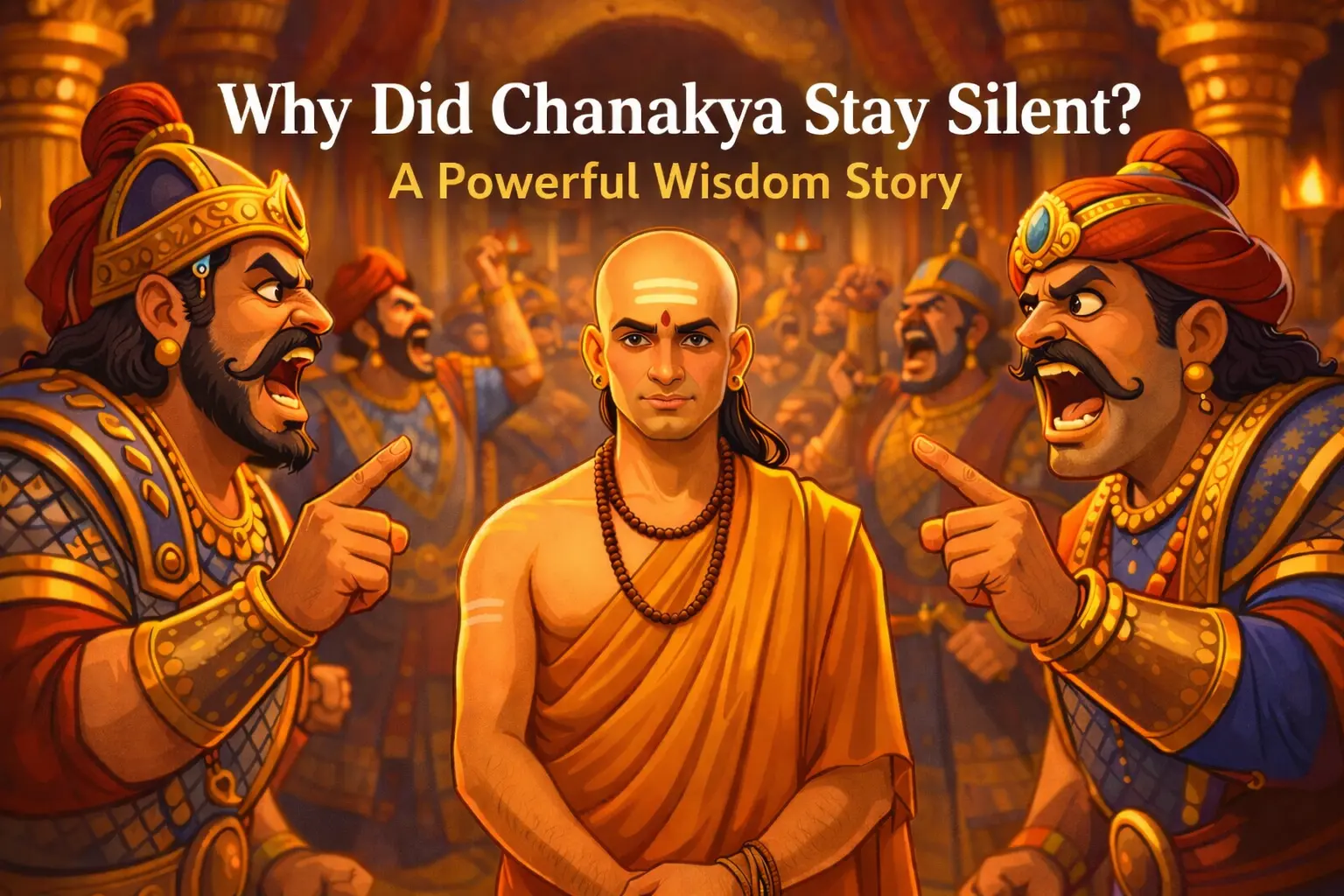
In the royal court of an ancient kingdom, tension filled the air.
Two powerful warriors stood before the king.
Their voices were loud and confident.
“Use force,” one warrior demanded.
“Strength will end this insult quickly,” said the other.
A neighboring kingdom had sent an insulting message.
Pride was wounded.
Anger filled the court.
Many ministers believed that a strong military response was the only solution.
Everyone waited for Chanakya’s decision.
But Chanakya stood quietly.
Calm.
Observant.
Silent.
🤫 Why Chanakya Trusted Silence Over Strength
Minutes passed.
The entire court waited.
Some ministers became impatient.
Whispers spread across the hall.
“Is silence fear?” someone murmured.
“Has wisdom failed today?” another asked.
Finally, Chanakya spoke.
His voice was calm and steady.
He said,
“Strength wins battles…
but silence wins outcomes.”
The court became silent again.
His words carried deep wisdom.
Chanakya understood something important:
Immediate reactions often benefit the enemy.
Silence gives time to think.
And time reveals the truth.
🕵️ The Messenger and the Hidden Truth
Chanakya asked for the messenger who had delivered the insulting message.
The man stepped forward nervously.
Chanakya did not shout.
He did not threaten.
Instead, he simply observed.
He watched the messenger’s behavior.
His expressions.
His hesitation.
Then Chanakya gave an unexpected command.
⏳ “Wait for three days.”
No retaliation.
No response.
No threats.
The court was shocked.
Why would a powerful kingdom remain silent after being insulted?
But Chanakya trusted his strategy.
🧩 The Strategy Behind Chanakya’s Silence
Chanakya believed silence was not weakness.
It was strategic power.
When people react quickly with anger, they reveal their plans.
But when they stay silent, they gather information.
Chanakya suspected that the neighboring kingdom wanted to provoke a war.
If the court reacted immediately, they would fall into the trap.
So he chose patience.
Because time exposes hidden motives.
⏳ What Happened After Three Days
Three days passed.
The kingdom remained silent.
There was no response.
No anger.
No threats.
Then something unexpected happened.
A new message arrived.
The neighboring kingdom apologized.
Their insult had been a trap.
They wanted to provoke the kingdom into war.
But Chanakya’s silence ruined their plan.
By refusing to react emotionally, he prevented a costly conflict.
The entire court was amazed.
🧠 Chanakya Explains His Wisdom
Chanakya addressed the court.
“If we had reacted with strength,” he said,
“we would have played their game.”
The ministers listened carefully.
“Silence denied them control.”
“Time revealed the truth.”
A young student asked respectfully,
“Acharya, when should one use strength?”
Chanakya smiled.
“When silence has already done its work.”
⭐ Why Silence Is a Powerful Strategy
Chanakya then explained his philosophy.
⚡ Strength is visible.
🎯 Silence is strategic.
“When you rush to act,” he said,
“you give your opponent information.”
“When you remain silent,” he continued,
“you collect information.”
True leaders know when to act.
But wise leaders also know when not to act.
🚀 7 Powerful Lessons from Why Chanakya Trusted Silence Over Strength
🧘 1. Patience Reveals Truth
Rushing into action hides important details. Patience reveals hidden motives.
🤫 2. Silence Can Be a Strategy
Silence is not weakness. It is controlled intelligence.
😌 3. Emotional Reactions Cause Mistakes
Anger clouds judgment. Calm thinking leads to better decisions.
🧠 4. Observation Is Powerful
Smart leaders observe before acting.
⏳ 5. Time Is a Strategic Tool
Sometimes waiting is the best decision.
💪 6. Self-Control Is True Strength
The strongest leaders control their emotions.
👑 7. Wisdom Defeats Force
Strategic thinking often defeats brute power.
🌟 Moral of the Story
✨ Silence is not weakness.
It is strength under control.
Those who pause and think before acting often achieve the greatest victories.
❓ FAQs – Why Chanakya Trusted Silence Over Strength
1️⃣ Why did Chanakya choose silence instead of strength in the story?
Chanakya chose silence instead of strength because he understood that reacting quickly with anger could lead to unnecessary conflict. By staying silent, he allowed time to reveal the true intentions of the neighboring kingdom.
2️⃣ What is the main lesson from the story “Why Chanakya Trusted Silence Over Strength”?
The main lesson of this story is that patience and strategic thinking are often more powerful than immediate action. Silence can help leaders observe situations clearly before making important decisions.
3️⃣ How did Chanakya’s silence prevent a war?
Chanakya suspected that the insult from the neighboring kingdom was meant to provoke a war. By choosing silence and waiting for three days, he avoided reacting emotionally. Eventually, the other kingdom apologized, preventing a costly conflict.
4️⃣ What does Chanakya teach about silence and strategy?
Chanakya teaches that silence can be a powerful strategic tool. When people react quickly, they reveal their intentions. But when they remain silent, they gain time to observe, think, and understand the situation better.
5️⃣ Why is Chanakya known for wisdom and strategy?
Chanakya is famous for his deep knowledge of politics, leadership, and diplomacy. His teachings, especially from the Arthashastra, explain how patience, intelligence, and strategy can solve complex problems.
6️⃣ What is the moral of the story “Why Chanakya Trusted Silence Over Strength”?
The moral of the story is that silence is not weakness. It is disciplined strength. Wise people observe and think carefully before reacting, which helps them make better decisions.
🌿 You May Also Like
The Two Wolves Story with Moral That Can Change Your Life
The Ant and the Dove Story in English
- 5 Heartbreaking Stories from Jabalpur Cruise Tragedy That Shook Everyone

- Heart Touching Father Son Story with Moral – A Real Story That Will Change Your Thinking About Father’s Love
- He Locked Himself in His Room After Scoring 82% — What Happened Next Shocked His Parents

- He Read His Father’s Letter Too Late — And It Changed Everything
- The Baby Monkey Who Hugged a Teddy Bear: 1 Emotional Story You Can’t Ignore
- The Call at Midnight: 7 Seconds of Silence That Cost Him Everything





📣 YouTube Channel Subscribe Line
👉 Subscribe to our YouTube channel for more beautiful moral stories for kids!
🔗 YouTube Channel – A Moral Stories (English)





Post Comment