✨ Introduction: Why the Navratri Story in English Still Captivates the World (Why is Navratri celebrated)
India is a country where every festival has a story, and every story carries timeless wisdom. Among all festivals, Navratri stands apart—not only because of its colorful dances, prayers, fasting, and rituals, but because of the inspiring Navratri story in English that continues to touch hearts across the globe.
For Indians, Navratri is a celebration of Shakti, the divine feminine energy. For international readers, it is a window into Indian mythology, spirituality, and cultural richness. The festival lasts for nine nights and ten days, and at its heart lies the eternal question: Why is Navratri celebrated?
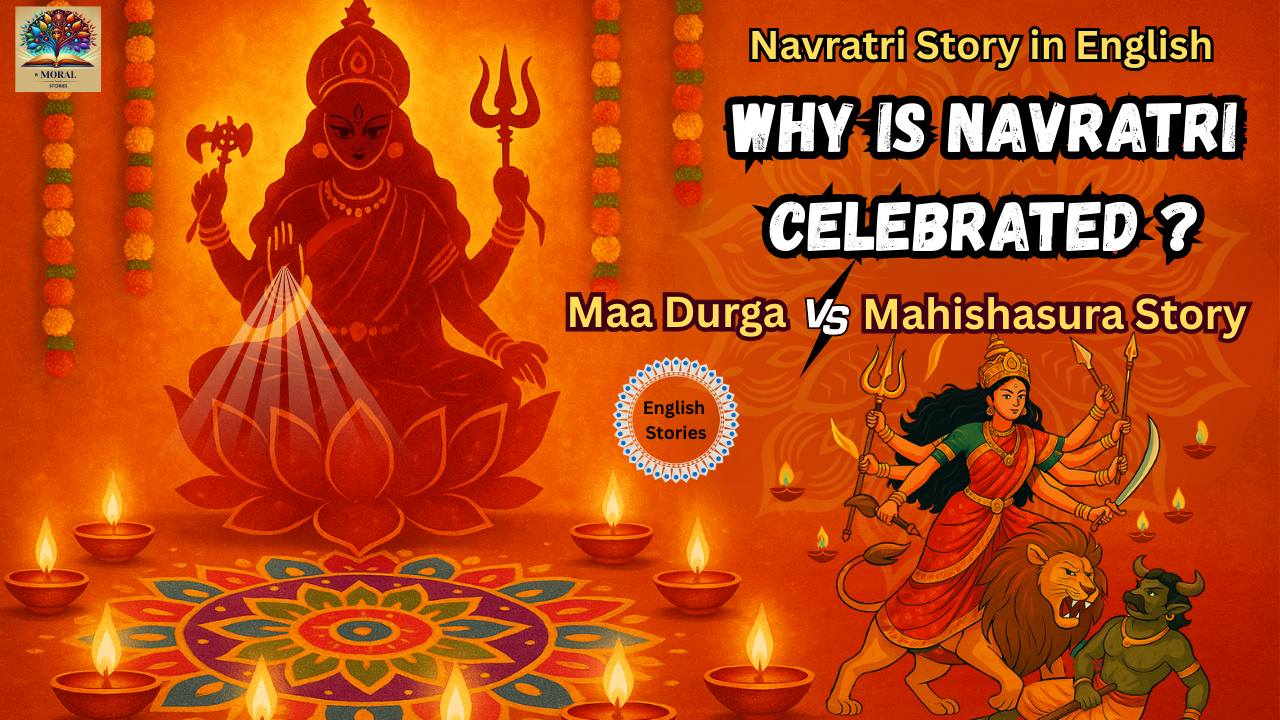
The answer is found in the powerful Goddess Durga and Mahishasura story. Long ago, the demon Mahishasura terrorized the world, misusing his boon of invincibility. No god could stop him—until the gods combined their powers and created Goddess Durga, the ultimate symbol of courage, compassion, and strength. For nine nights, she fought Mahishasura, and on the tenth day, she triumphed.
But the significance of Navratri is not only mythological. Each day honors one of the nine forms of Goddess Durga, representing values like courage, purity, wisdom, and motherhood. Each region of India celebrates differently—Garba and Dandiya in Gujarat, Durga Puja in Bengal, Ram Lila in North India, Golu dolls in South India—yet the spirit remains the same: victory of good over evil.
Today, the Navratri story in English has global resonance. From London to New York, Garba nights and Durga Puja pandals bring communities together. UNESCO even recognized Garba as part of the world’s intangible cultural heritage in 2023. This proves that Navratri is not just India’s festival—it belongs to the world.
In this blog, we will explore the mythological story, 9 nights of Navratri, traditions, lessons, and cultural pride. By the end, you will not only know why is Navratri celebrated, but also how this story guides us in everyday life.
🌸 Navratri Story in English – Why Is Navratri Celebrated, History, 9 Nights Significance & Lessons from Goddess Durga
👹 The Demon Mahishasura – Arrogance Before the Fall
Mahishasura was a demon with a buffalo’s body and a human’s intelligence. Through harsh penance, he received a boon from Lord Brahma: “No man or god shall ever kill you.”
With this power, he conquered heaven and earth. The gods fled in fear. Mahishasura declared himself ruler of all worlds, laughing:
“No force can stop me. I am eternal.”
But arrogance blinded him. His tyranny disrupted balance in creation. This is when the gods sought a solution.
🌹 The Birth of Goddess Durga – The Divine Answer
Realizing no man could defeat Mahishasura, the gods turned to the power of Shakti. From their combined energies emerged Goddess Durga. She had ten arms, each carrying a divine weapon: Shiva’s trident, Vishnu’s discus, Indra’s thunderbolt, Varuna’s conch, Agni’s spear.
Her beauty radiated peace, but her eyes blazed with determination. Riding a lion, she was the embodiment of fearlessness. Thus began the Goddess Durga and Mahishasura story—the central legend that explains why is Navratri celebrated.
🏹 The Epic Battle of Nine Nights – Durga vs Mahishasura
The battle lasted for nine nights of Navratri.
- On the first night, Durga fought his armies.
- On the second and third nights, she crushed his generals.
- From the fourth to seventh nights, Mahishasura kept changing forms—lion, elephant, buffalo—but Durga matched every form.
- On the eighth night, she wounded him deeply.
- On the ninth night, she pierced her trident into his chest.
On the tenth day—Vijayadashami (Dussehra), Mahishasura was slain. The gods rejoiced. Balance was restored. This victory is the very reason Navratri is celebrated every year.
🌌 The 9 Nights of Navratri – Forms, Colors, and Significance
Each night of Navratri is dedicated to one of the nine forms of Goddess Durga (Navadurga):
- Shailaputri – Strength, grounding (color: grey/white).
- Brahmacharini – Devotion, penance (color: yellow).
- Chandraghanta – Peace and bravery (color: red).
- Kushmanda – Creative energy (color: green).
- Skandamata – Motherhood and compassion (color: royal blue).
- Katyayani – Warrior goddess (color: orange).
- Kalaratri – Destroyer of fear (color: white/black).
- Mahagauri – Purity and forgiveness (color: pink).
- Siddhidatri – Wisdom and perfection (color: purple).
These days are not just rituals. They are a spiritual journey of defeating inner demons and nurturing divine qualities.
🎉 Navratri Traditions Across India – From Garba to Durga Puja
- Gujarat – Famous for Garba and Dandiya, where thousands dance in circles celebrating Shakti.
- Bengal – Celebrated as Durga Puja, with grand idols, artistic pandals, and cultural performances.
- North India – Linked to Ramayana, with Ram Lila plays and burning of Ravana effigies on Dussehra.
- South India – Families display Golu dolls and worship Saraswati.
- Nepal – Celebrated as Dashain, honoring Durga’s victory.
This cultural diversity is part of the significance of Navratri.
🌍 Navratri Beyond Borders – A Festival That Went Global
Today, Navratri is not limited to India.
- In London, Toronto, New Jersey, Garba nights attract thousands.
- In Singapore and Malaysia, Durga Puja pandals are community events.
- In 2023, UNESCO recognized Garba as world heritage.
The Navratri story in English is now celebrated worldwide, making it both cultural and global.
📜 15 Precious Life Lessons from the Navratri Story (Why is Navratri celebrated)
- Good always triumphs over evil.
- Ego leads to downfall.
- Unity creates strength.
- Women embody divine power.
- Discipline defeats laziness.
- Compassion balances courage.
- Anger must be controlled.
- Faith empowers.
- Arrogance blinds.
- Purity brings peace.
- Fear can be destroyed with courage.
- Wisdom is the highest strength.
- Festivals unite communities.
- Spirituality is timeless.
- Inner battles are as important as outer ones.
🌱 Modern Relevance – Fighting Our Inner Demons Today
The moral of Navratri story applies to our lives. Mahishasura is not only a demon of the past—he represents greed, ego, and laziness within us. Navratri teaches us to defeat these inner demons with courage, humility, and devotion.
In workplaces, it teaches teamwork. In families, it teaches compassion. For women, it is empowerment. For youth, it is discipline. This is why Navratri is celebrated even today with so much relevance.
📘 Vocabulary for International Readers
- Asura – Demon in Indian mythology
- Shakti – Divine feminine power
- Puja – Worship ritual
- Boon – Divine blessing
- Vijayadashami – Day of victory
- Garba/Dandiya – Gujarati folk dances during Navratri
🏡 Activities for Parents & Teachers (Why is Navratri celebrated)
- Storytelling with role play.
- Drawing the nine forms of Durga.
- Journaling “inner demons to defeat.”
- Organizing Garba dance.
- Making Golu doll displays.
- Conducting quizzes on Navratri.
- Teaching simple devotional songs.
- Essay writing on “Why is Navratri celebrated.”
❓ FAQs About Why is Navratri celebrated
1. Why Is Navratri Celebrated?
Navratri is celebrated to honor Goddess Durga and her divine feminine power, known as Shakti. According to Hindu mythology, Goddess Durga defeated the demon Mahishasura, symbolizing the victory of good over evil. The festival also celebrates courage, devotion, strength, and the power to overcome negativity.
2. What Is the Story Behind Navratri?
The story of Navratri revolves around the powerful demon Mahishasura, who terrorized the gods and the world. To defeat him, the gods combined their divine energies to create Goddess Durga. After a fierce battle, Goddess Durga defeated Mahishasura and restored peace and balance to the universe.
3. Why Is Navratri Celebrated for Nine Nights?
Navratri is celebrated for nine nights to honor Goddess Durga and her nine divine forms, collectively known as Navadurga. Each day represents a different form of the Goddess and symbolizes qualities such as courage, devotion, wisdom, purity, and compassion. The festival concludes on the tenth day, known as Vijayadashami or Dussehra in many regions.
4. Who Is Goddess Durga?
Goddess Durga is a powerful Hindu goddess who represents Shakti, or divine feminine energy. She is worshipped as the protector of the universe and the destroyer of evil. Often depicted riding a lion or tiger and holding divine weapons, Goddess Durga symbolizes courage, strength, protection, and righteousness.
5. Who Was Mahishasura in Hindu Mythology?
Mahishasura was a powerful demon in Hindu mythology who could take the form of a buffalo. According to the traditional story, he received a boon from Lord Brahma and became arrogant, challenging the gods and disturbing the cosmic order. Goddess Durga ultimately defeated him, restoring peace and symbolizing the triumph of good over evil.
6. What Are the Nine Forms of Goddess Durga?
The nine forms of Goddess Durga are known as Navadurga. They are Maa Shailaputri, Maa Brahmacharini, Maa Chandraghanta, Maa Kushmanda, Maa Skandamata, Maa Katyayani, Maa Kalaratri, Maa Mahagauri, and Maa Siddhidatri. Each form represents different spiritual qualities, including strength, devotion, courage, motherhood, purity, and wisdom.
7. What Is the Significance of Navratri?
The significance of Navratri lies in its celebration of divine feminine power and the victory of good over evil. The festival encourages people to develop positive qualities such as courage, humility, faith, discipline, and compassion. It also brings families and communities together through prayers, fasting, traditional dances, and cultural celebrations.
8. What Is the Difference Between Navratri and Dussehra?
Navratri is a nine-night festival dedicated to Goddess Durga and her divine forms. Dussehra, also known as Vijayadashami, is celebrated on the tenth day and symbolizes the victory of good over evil. In many traditions, it commemorates Goddess Durga’s victory over Mahishasura, while other regions also celebrate Lord Rama’s victory over Ravana.
9. Why Is Garba Performed During Navratri?
Garba is a traditional folk dance from Gujarat performed during Navratri to honor Goddess Durga and the divine feminine energy. Dancers move in circles around a central point or devotional symbol, representing the cycle of life and the continuity of divine energy. Garba brings people together through music, devotion, colorful clothing, and celebration.
10. What Is the Moral of the Goddess Durga and Mahishasura Story?
The moral of the Goddess Durga and Mahishasura story is that good ultimately triumphs over evil. It teaches us that arrogance can lead to downfall, while courage, unity, wisdom, and determination help overcome challenges. The story also inspires people to fight negativity within themselves and stand for truth, justice, and righteousness.
🔗 You may also like
👉 Read more inspiring stories:
👉 The Neem Tree and the Brave Animals Moral Story: 7 Brave Animals Who Saved Their Home
👉 A Grandfather’s Powerful Secret: The Two Wolves Story with Moral That Can Change Your Life
👉 Horse and Donkey Short Story About Helping Others for Kids (With Moral)
👉 Read more Hindu God stories:
👉 Little Hanuman and the Sun God
👉 Why Lord Hanuman Is Called Chiranjivi?
👉 Why Lord Vishnu Took Matsya Avatar
👉 Dashavatara Story for Kids in English
👉 Ganesh and Kartikeya Story in English
🎥 YouTube Channel Subscribe CTA
Enjoyed this heart-touching tale? Subscribe to our YouTube Channel “A Moral Stories” to enjoy more moral stories for kids in English, animated and narrated with love! 🌟📺
👉 Subscribe to our YouTube channel for more fun moral stories for children!
🔗 YouTube Channel – A Moral Stories (English)
✨ Final Thoughts – The Timeless Magic and Cultural Pride of Navratri (Why is Navratri celebrated)
The story of Navratri is more than a tale from the past—it is a living tradition that shapes India’s culture and inspires the world.
When we ask, “Why is Navratri celebrated?”, the answer is multi-layered. It is celebrated because Goddess Durga defeated Mahishasura. It is celebrated because the nine nights of Navratri teach us values—strength, purity, compassion, courage, and wisdom. It is celebrated because communities across India, from Gujarat’s Garba to Bengal’s Durga Puja, come together in unity.
But more than all this, Navratri is celebrated because it speaks to the human spirit. We all fight our own battles, we all face inner demons, and we all seek light after darkness. The Navratri story in English reminds us that no matter how strong negativity feels, it cannot last forever. With faith and courage, victory is always possible.
In a modern world full of challenges, the significance of Navratri is more relevant than ever. It inspires women to embrace their power, families to stay united, and individuals to rise above ego and greed. It is not just India’s festival—it is humanity’s festival of hope.
So, whether you watch a Garba dance in Gujarat, a Durga Puja in Kolkata, or a Navratri celebration in New Jersey, remember: you are witnessing a timeless truth. Evil may roar loudly, but goodness always wins quietly yet powerfully. That is why Navratri continues to shine—not just as a festival, but as a guide for life.


Post Comment