The Oath That Changed Indian History: Why Chanakya Untied His Shikha and Challenged an Empire (Part 8)
History does not always change through wars.
Sometimes, it changes because of a vow.
The Oath That Changed Indian History was not shouted in anger.
It was spoken with discipline, control, and terrifying clarity.
After his public humiliation in the court of Magadha,
Chanakya walked out in silence.
But that silence carried the weight of revolution.
The Sacred Meaning Behind The Oath That Changed Indian History
To understand The Oath That Changed Indian History, one must first understand the meaning of the shikha.
For a Brahmin, the shikha is not just a tuft of hair.
It represents:
- Spiritual discipline
- Intellectual identity
- Control over ego
- Commitment to knowledge
A tied shikha symbolizes order and restraint.
Untying it is not casual.
It signals disruption.
It declares that balance has been disturbed.
For Chanakya, his shikha represented years of study, patience, and self-control.
Inside the royal court, that identity had been insulted.
Not merely the man — but the values he embodied.
The Moment That Defined The Oath That Changed Indian History
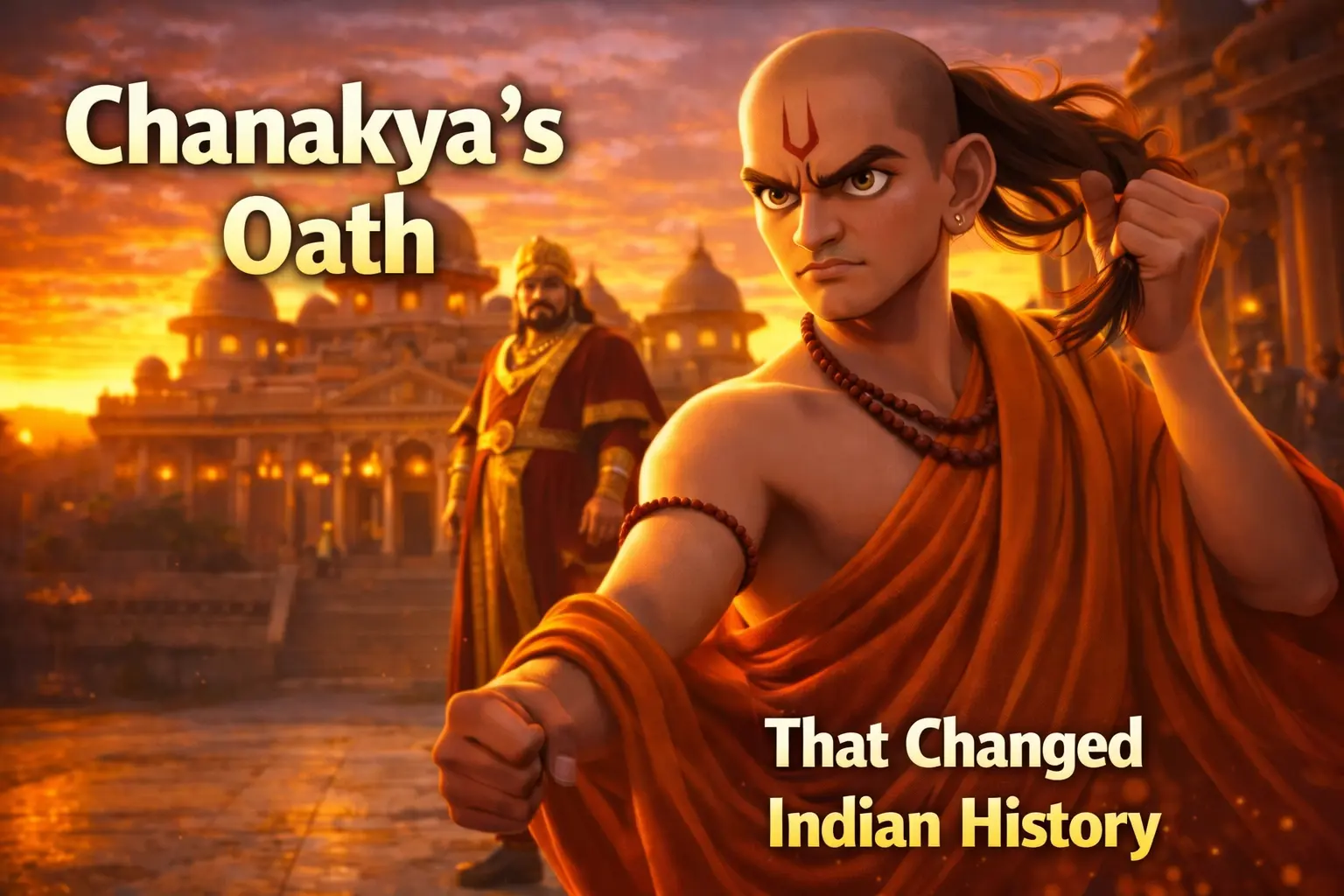
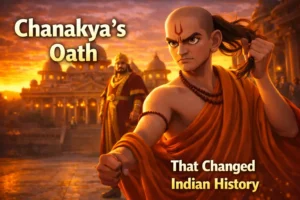
Outside the palace gates, the evening sky burned in deep amber.
Chanakya stopped walking.
Slowly, he lifted his hand.
He gripped his shikha.
Not violently.
Not impulsively.
But firmly.
His eyes reflected controlled fury — not emotional chaos, but absolute resolve.
Then, deliberately, he untied it.
The strands loosened.
The symbol of discipline was now open.
Facing the palace of King Dhanananda, he spoke in a steady, low voice:
“This dynasty will fall.”
He did not shout.
He did not threaten loudly.
He declared.
That quiet sentence marked The Oath That Changed Indian History.
More Than Revenge
Many men react to humiliation.
Few convert humiliation into strategy.
The insult in the court had been personal.
But the oath was political.
Chanakya understood that Magadha’s weakness was not its army.
It was its arrogance.
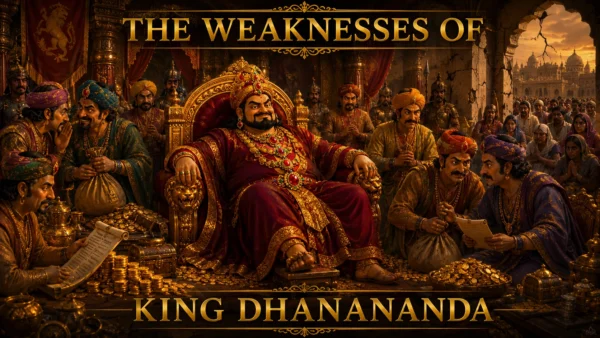
Dhanananda had mocked wisdom in front of his court.
And in doing so, he had created his most dangerous opponent — a patient strategist.
The untied shikha was now a reminder of unfinished work.
It would remain untied until the Nanda dynasty was uprooted.
Why The Oath That Changed Indian History Mattered
From that moment, Chanakya’s life shifted.
He was no longer simply a scholar.
He became a man with a mission.
Every decision would now serve one objective.
To dismantle tyranny.
To rebuild order.
To place a ruler on the throne who valued wisdom.
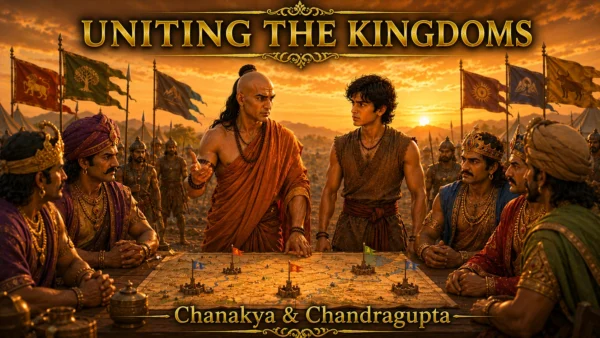
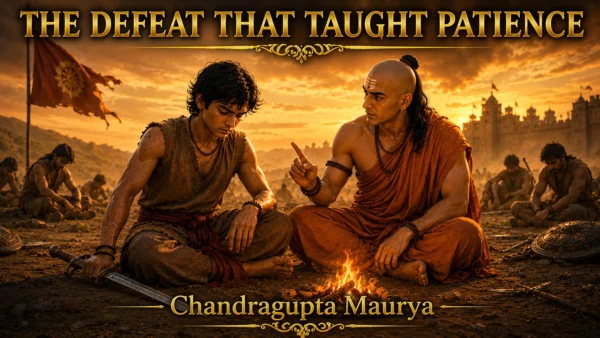
Somewhere beyond the palace walls, a young boy shaped by hardship was growing stronger —
Chandragupta Maurya.
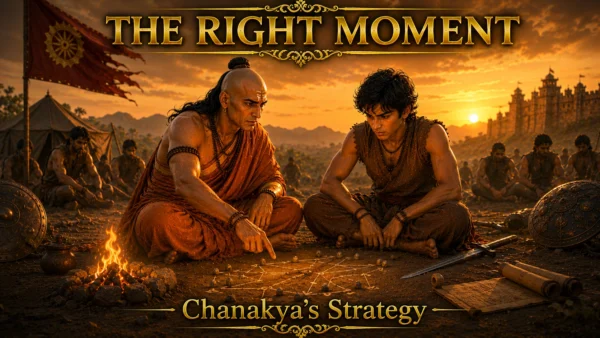
The oath had defined the mission.
History would soon provide the instrument.
🌟 Moral
When discipline binds itself to purpose, even empires begin to tremble.
✨ Curiosity Ending
The shikha remained untied.
And the dynasty had just received its first silent warning.
❓ FAQs – The Oath That Changed Indian History
1. Who was Chanakya and why was he important in Indian history?
Chanakya was an ancient Indian teacher, philosopher, and strategist who played a crucial role in establishing the Maurya Empire by mentoring Chandragupta Maurya.
2. Why did Chanakya untie his shikha?
Chanakya untied his shikha after being insulted by King Dhanananda in the royal court of Magadha. For a Brahmin, the shikha symbolizes discipline and identity, so leaving it untied represented a powerful vow for justice.
3. What was Chanakya’s oath after the insult?
Chanakya vowed that he would not tie his shikha again until the Nanda dynasty was completely destroyed.
4. Why is Chanakya’s oath considered a turning point in Indian history?
Chanakya’s oath eventually led to the rise of Chandragupta Maurya and the fall of the Nanda dynasty, which resulted in the creation of the powerful Maurya Empire.
5. What does the shikha symbolize in ancient Indian tradition?
In ancient Indian tradition, the shikha represents spiritual discipline, intellectual identity, and commitment to knowledge, especially among Brahmins.
6. Did Chanakya really challenge King Dhanananda openly?
Historical sources confirm that Chanakya was insulted and took a vow to destroy the Nanda dynasty. However, the dramatic public challenge often seen in stories and shows comes from later traditional retellings.
📖 Continue the Chanakya Series
➡ Part 6: Chanakya Enters the Court of King Dhanananda: The Day Pride Faced Wisdom
⬅ Part 7: The Public Insult of Chanakya in Magadha
- The Clever Secret Behind Tenali Raman and the Weight of Ashes (A Brilliant Story of Wisdom)

- Tenali Raman and the Brinjal Curry – A Clever Trick That Silenced the Court
- Tenali Raman Exposed a Liar Without Saying a Word – A Brilliant Courtroom Lesson
- Tenali Raman and the Two Thieves – A Clever Trick That Saved His House
- Tenali Raman and the Horse Trader – A Lesson in Smart Thinking
- The Problem No Scholar Could Solve—Tenali Did It Without a Word
📣 YouTube Channel Subscribe Line
👉 Subscribe to our YouTube channel for more beautiful moral stories for kids!
🔗 YouTube Channel – A Moral Stories (English)


Post Comment