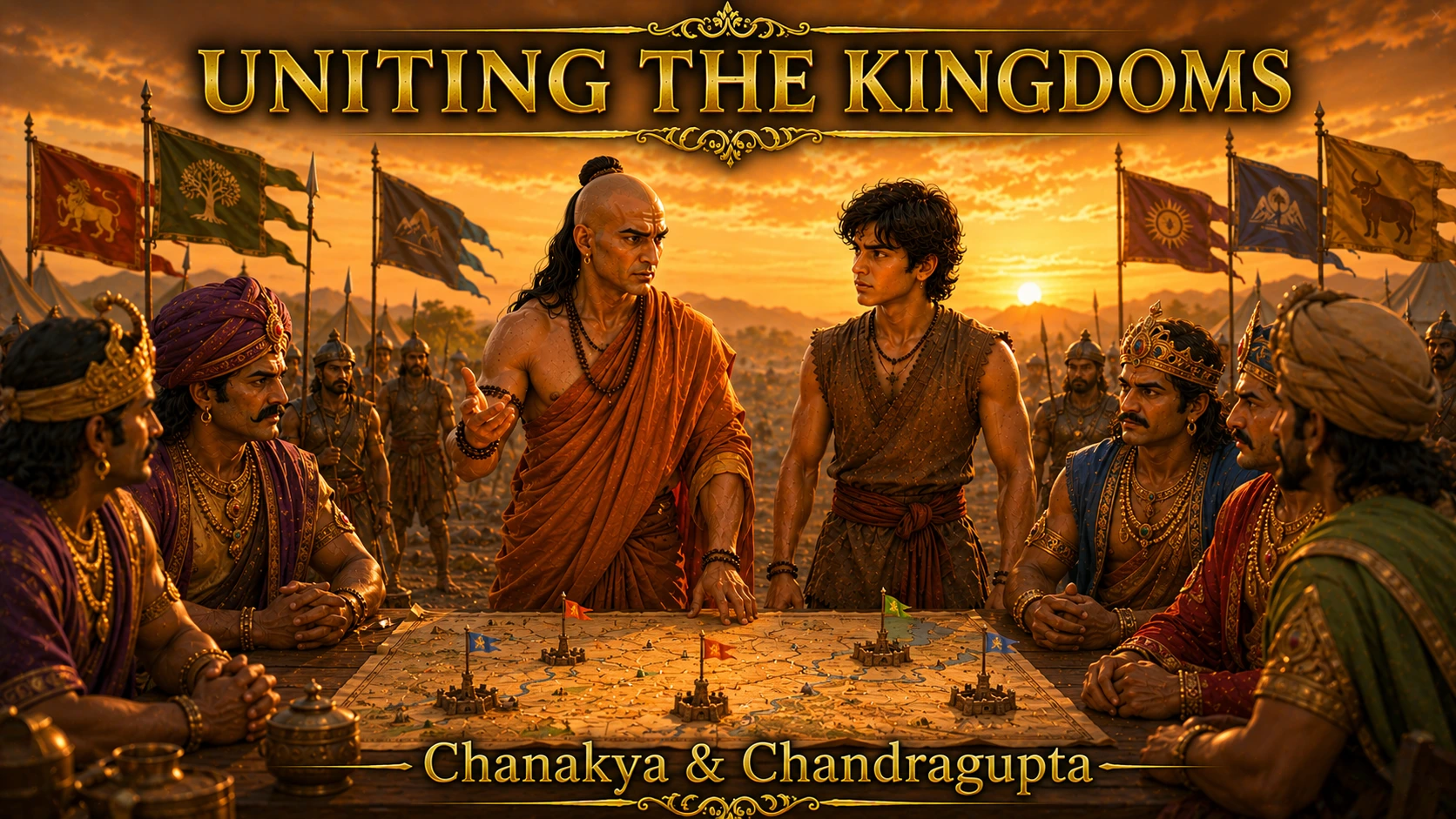
How Chanakya United Small Kingdoms: The Alliance That Challenged Magadha (Part 16)
📖 When Strategy Became Unity
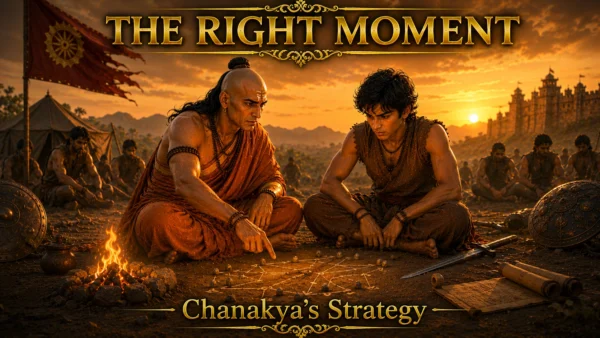
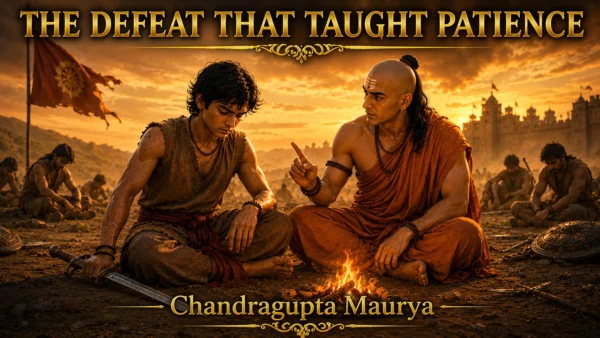
The campfire burned quietly beneath the evening sky.
For weeks, Chandragupta Maurya had been learning lessons that no battlefield could teach.
First came defeat.
Then came patience.
Then came timing.
Now, another lesson was about to begin.
A lesson that would prove even more important than armies and weapons.
A lesson about people.
A lesson about unity.
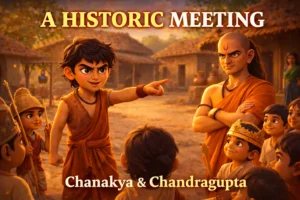
As Chandragupta sat beside Chanakya, he finally asked the question that had been on his mind for days.
“Acharya, if the right moment has not arrived yet… what should we do now?”
Chanakya looked toward the distant horizon.
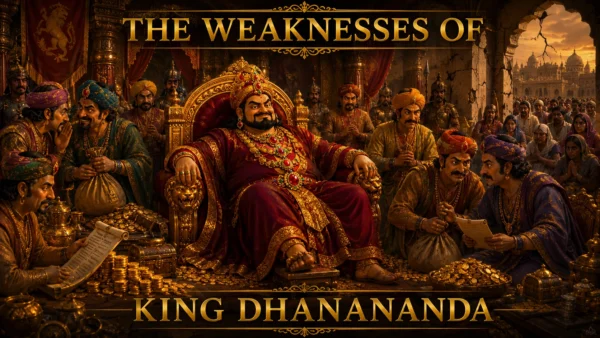
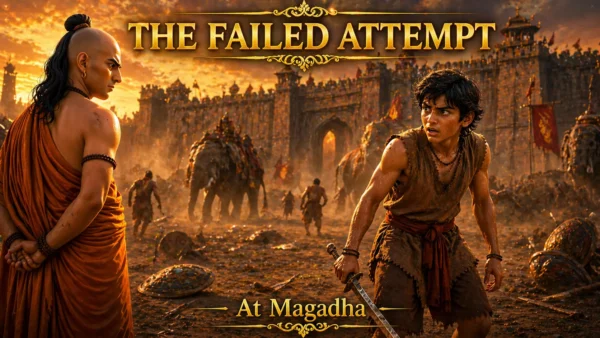
Far beyond the hills stood Magadha, still powerful, still wealthy, and still ruled by King Dhanananda.
Then he replied:
“We create the right moment.”
Chandragupta looked puzzled.
“How?”
Chanakya smiled.
“By doing what Magadha has failed to do.
By bringing people together.”
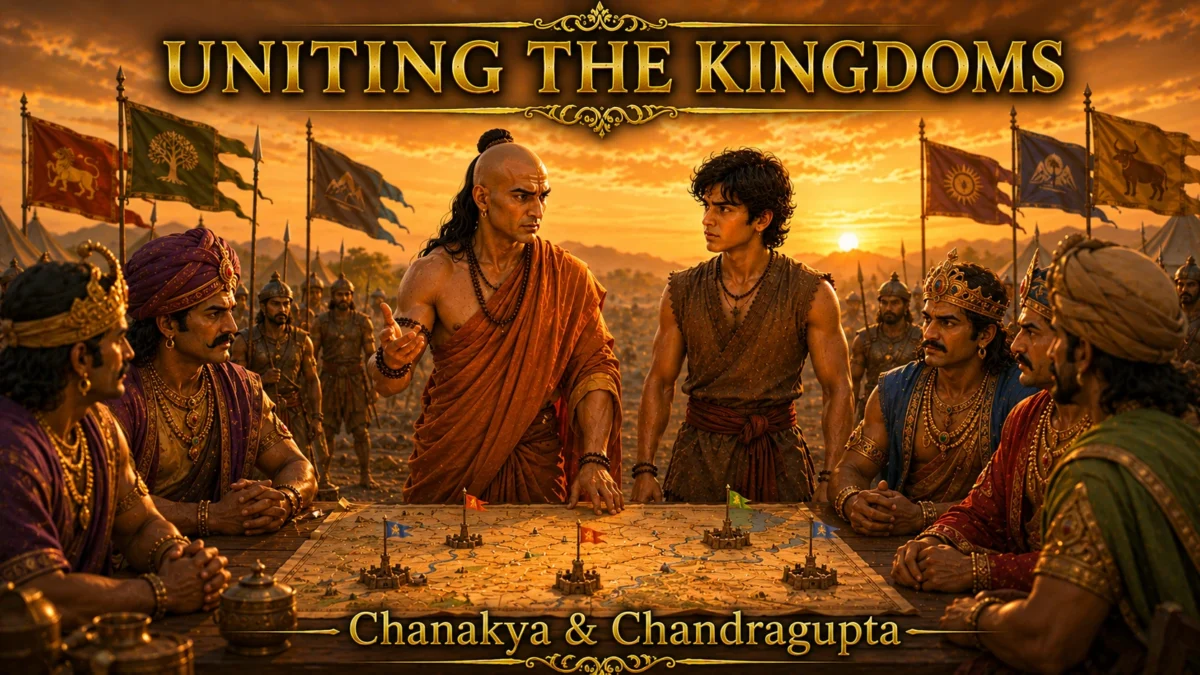
Thus began the story of How Chanakya United Small Kingdoms 🤝
🌍 Why Small Kingdoms Feared Magadha
Across northern India, many small kingdoms existed.
Some were prosperous.
Some were struggling.
Some were ruled by wise kings.
Others by ambitious rulers.
Yet despite their differences, they shared one thing in common.
Fear.
Fear of Magadha.
Magadha’s armies were enormous.
Its treasury overflowed with wealth.
Its influence stretched across vast territories.
Many smaller rulers believed resistance was impossible.
They saw Magadha as a giant mountain.
Too large to challenge.
Too powerful to oppose.
And because of that fear, they remained divided.
Each kingdom worried only about its own survival.
Chanakya understood something important.
As long as these kingdoms remained divided, Magadha would remain strong.
🧠 Chanakya’s New Strategy
Chanakya no longer wanted another direct attack.
The lesson of the first defeat was still fresh.
Instead, he chose a different path.
Diplomacy.
Cooperation.
Unity.
He explained to Chandragupta:
“A single arrow can break easily.
A bundle of arrows is difficult to break.”
The young warrior listened carefully.
This was not a lesson about battle.
It was a lesson about leadership.
Chanakya knew that defeating Magadha would require more than soldiers.
It would require allies.
👑 Chandragupta Learns a New Kind of Leadership
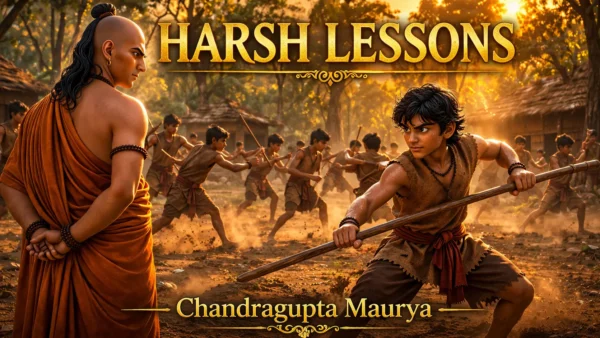
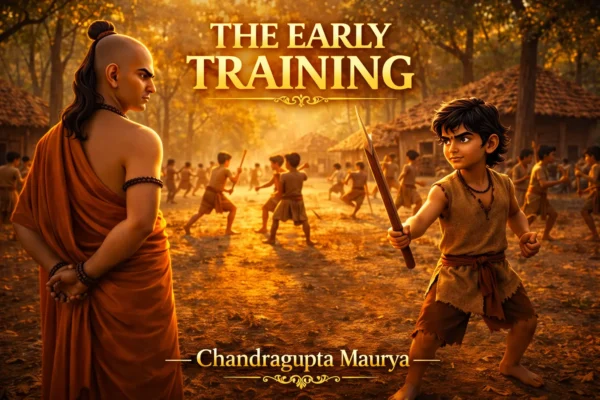
Until now, Chandragupta had spent years learning warfare.
He knew how to fight.
He knew how to train.
He knew how to endure hardship.
But now Chanakya wanted him to learn something different.
How to earn trust.
How to inspire confidence.
How to unite people with different interests.
Because a future emperor must do more than win battles.
He must unite nations.
This became a crucial part of How Chanakya United Small Kingdoms.
🚶 The Journey Begins
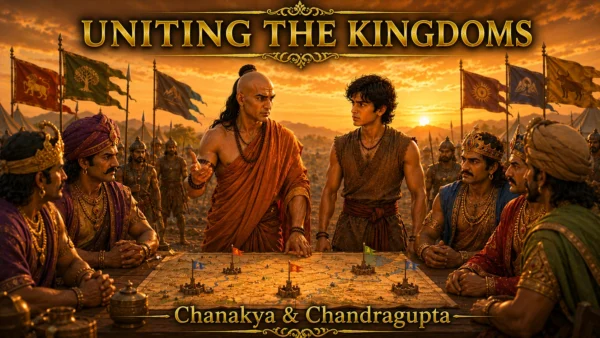
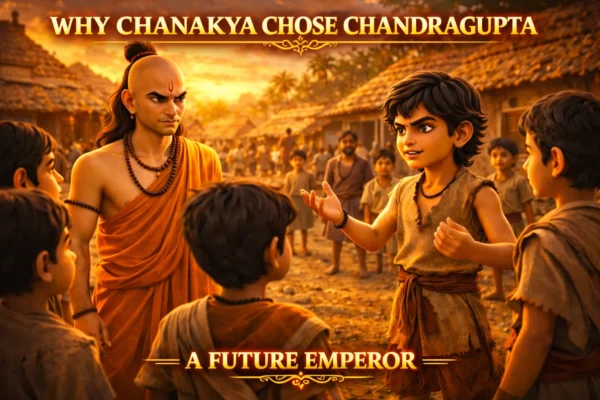
Soon, Chanakya and Chandragupta began traveling.
Not with a large army.
Not with royal banners.
But with a small trusted group.
They moved from kingdom to kingdom.
From city to city.
From court to court.
Their goal was simple.
To listen.
To understand.
And to build relationships.
Chanakya believed that before asking for support, one must first understand concerns.
So they listened carefully.
Every ruler had fears.
Every ruler had hopes.
Every ruler had ambitions.
Understanding those motivations became the foundation of diplomacy.
🤝 The First Powerful Alliance
Their first major success came with a ruler who had long suffered under Magadha’s influence.
At first, the king remained cautious.
He doubted Chandragupta.
He doubted Chanakya.
And he doubted the possibility of defeating Magadha.
But Chanakya did not pressure him.
Instead, he spoke about the future.
He spoke about justice.
He spoke about freedom from oppression.
Slowly, the ruler began to trust him.
And eventually, he agreed to support their cause.
It was a small victory.
But every great alliance begins with a single agreement.
🌟 Alliance Principle 1: Build Trust Before Power
Chanakya taught Chandragupta:
“People support those they trust, not those they fear.”
This became the first principle of alliance-building.
Trust comes before power.
Without trust, alliances collapse.
With trust, even small groups can achieve extraordinary things.
🏛️ Visiting More Kingdoms
Word slowly spread.
Some rulers became curious.
Others remained skeptical.
A few openly refused to cooperate.
But Chanakya never became frustrated.
He understood that diplomacy requires patience.
Every conversation mattered.
Every meeting created opportunity.
Every relationship planted a seed.
Some seeds would grow immediately.
Others would take time.
🌟 Alliance Principle 2: Listen Before You Lead
One ruler spent hours describing problems facing his kingdom.
Many leaders would have interrupted.
Chanakya listened quietly.
Only after understanding everything did he offer advice.
Later, Chandragupta asked why.
Chanakya replied:
“People follow leaders who understand them.”
This became another valuable lesson.
Great leadership begins with listening.
⚖️ Alliance Principle 3: Find a Common Purpose
Although the kingdoms were different, they shared common concerns.
Heavy taxation.
Fear of expansion.
Loss of independence.
Uncertainty about the future.
Chanakya focused on these shared concerns.
Instead of emphasizing differences, he emphasized common goals.
This approach gradually united people who had once distrusted one another.
🛡️ Alliance Principle 4: Respect Every Kingdom
Many rulers expected Chanakya to behave arrogantly.
After all, Chandragupta hoped to become emperor someday.
But Chanakya taught humility.
He respected every ruler.
Every kingdom.
Every culture.
Even the smallest states received respect.
Because respect creates loyalty.
And loyalty creates lasting partnerships.
👁️ Chandragupta Observes Carefully
As the journey continued, Chandragupta watched everything.
He saw how Chanakya spoke differently with different rulers.
He noticed how his teacher adapted to each situation.
With warriors, he discussed courage.
With merchants, he discussed prosperity.
With scholars, he discussed knowledge.
With kings, he discussed responsibility.
The lesson was clear.
Leadership is not about forcing others to think like you.
It is about understanding them.
🌟 Alliance Principle 5: Create Mutual Benefit
Chanakya never promised unrealistic rewards.
Instead, he focused on mutual benefit.
If Magadha’s power weakened:
✔ smaller kingdoms would gain security
✔ trade would improve
✔ independence would increase
✔ prosperity would expand
Everyone had something to gain.
And because of that, more rulers joined the alliance.
🏹 Alliance Principle 6: Unite Against Tyranny
Chanakya understood that opposition alone is not enough.
People need a purpose.
That purpose became resistance against oppression.
Many rulers had witnessed the effects of Dhanananda’s greed.
Many had seen how fear spread under his influence.
Gradually, opposition transformed into unity.
The alliance was no longer simply against Magadha.
It was for a better future.
🔥 The Growing Coalition
Months passed.
Support increased.
More kingdoms joined.
More resources became available.
More soldiers pledged support.
The movement was growing.
And for the first time, Magadha was no longer facing isolated opponents.
It was facing cooperation.
Unity.
Strategy.
🌟 Alliance Principle 7: Think Beyond Yourself
One evening, Chandragupta asked:
“Why are these rulers helping us?”
Chanakya answered:
“Because we are asking them to think beyond themselves.”
This became the seventh principle.
The greatest leaders inspire people to work toward something larger than personal gain.
That vision brought the alliance together.
👑 Chandragupta Begins Thinking Like an Emperor
The journey transformed Chandragupta.
Before, he saw victory mainly through military strength.
Now he understood the power of relationships.
The power of trust.
The power of diplomacy.
The power of unity.
These lessons would become essential when he eventually ruled an empire.
🌫️ Magadha Remains Unaware
Meanwhile, King Dhanananda remained confident.
His armies were strong.
His treasury was full.
His authority appeared secure.
But he could not see what was happening beyond his borders.
Small kingdoms were no longer isolated.
They were becoming connected.
And every new alliance strengthened Chandragupta’s position.
⚔️ Why This Strategy Was So Powerful
Most rulers focus only on military strength.
Chanakya focused on human strength.
Because armies can be defeated.
But a united cause becomes much harder to destroy.
This is why How Chanakya United Small Kingdoms became one of the most important chapters in the rise of the Maurya Empire.
🌅 The Foundation of Future Victory
The alliance was not yet complete.
The war had not yet begun.
Magadha still stood strong.
But something important had changed.
The balance of power was beginning to shift.
Not because of swords.
Not because of wealth.
But because people had started working together.
And that frightened tyrants more than armies ever could.
🌟 7 Powerful Alliances That Strengthened Chandragupta’s Cause
1️⃣ Building Trust Before Power
2️⃣ Listening Before Leading
3️⃣ Finding a Common Purpose
4️⃣ Respecting Every Kingdom
5️⃣ Creating Mutual Benefit
6️⃣ Uniting Against Tyranny
7️⃣ Thinking Beyond Personal Gain
These seven principles became the foundation of How Chanakya United Small Kingdoms.
🌟 Moral : How Chanakya United Small Kingdoms.
Unity creates strength that even the most powerful kingdoms cannot easily defeat.
✨ Ending : How Chanakya United Small Kingdoms.
As another evening settled across the land, Chandragupta looked toward the future.
The alliance was growing.
The vision was spreading.
And Magadha remained unaware of the storm gathering beyond its borders.
The first attack had failed.
Patience had been learned.
Timing had been understood.
Now unity was being built.
And soon, that unity would challenge the most powerful kingdom in India.
❓ Frequently Asked Questions About How Chanakya United Small Kingdoms
1. How Chanakya United Small Kingdoms?
Chanakya united small kingdoms through diplomacy, trust-building, and a shared vision against oppression.
2. Why did Chanakya form alliances?
He understood that defeating Magadha required unity rather than isolated resistance.
3. What role did diplomacy play in Chanakya’s strategy?
Diplomacy helped gain support, resources, and trust from neighboring rulers.
4. Why were small kingdoms afraid of Magadha?
Because Magadha possessed enormous wealth, military power, and political influence.
5. How did Chanakya gain the trust of rulers?
By listening carefully, respecting their concerns, and offering mutual benefits.
6. What did Chandragupta learn from diplomacy?
He learned leadership, negotiation, trust-building, and alliance management.
7. What were the 7 alliance principles of Chanakya?
Trust, listening, common purpose, respect, mutual benefit, unity, and long-term vision.
8. How did alliances strengthen Chandragupta?
They provided support, resources, intelligence, and military cooperation.
9. Why is How Chanakya United Small Kingdoms important?
It shows how diplomacy and unity helped lay the foundation of the Maurya Empire.
10. What happened after Chanakya united small kingdoms?
The growing alliance prepared for the next phase of challenging Magadha’s power.
📖 Continue the Chanakya Series
⬅ Part 14: The Defeat That Taught Patience
⬅ Part 15: Chanakya’s Lesson of the Right Moment
- The Puzzle That Confused the Entire Court – An Akbar Birbal Story

- King Akbar Asked for Proof of God – Birbal’s Answer Shocked Everyone
- Everyone Believed He Was Guilty… Birbal’s One Answer Changed the Verdict
- Akbar Passed Judgment in a Hurry… Birbal Made Him Listen
- The Scholar Spoke for Hours… Birbal Answered Without a Single Word
- Akbar Lost His Ring Inside the Court… No One Could Find It Until Birbal Spoke
📣 YouTube Channel Subscribe Line
👉 Subscribe to our YouTube channel for more beautiful moral stories for kids!
🔗 YouTube Channel – A Moral Stories (English)



Post Comment