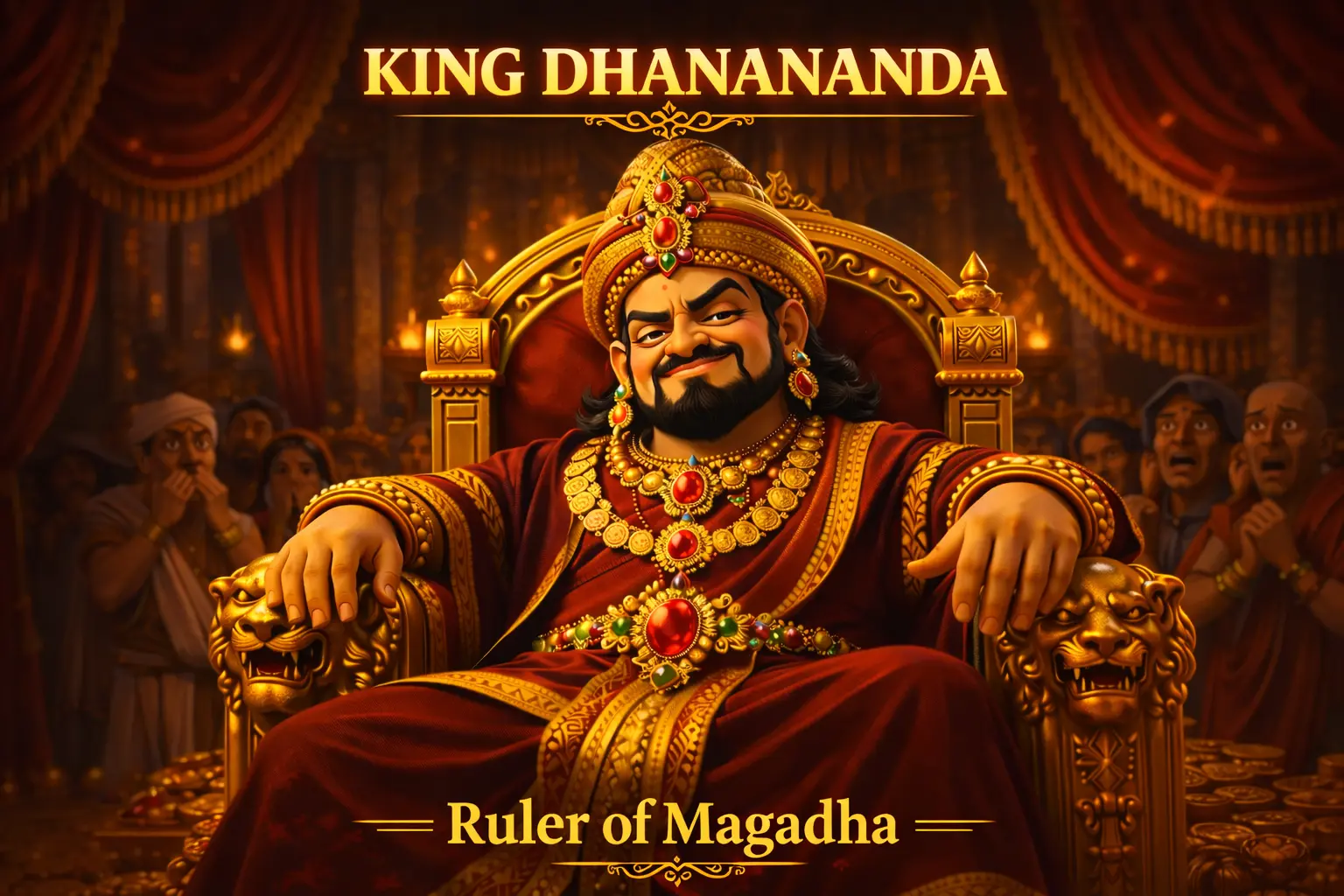
Who Was King Dhanananda of Magadha? (Part 1)
📖 Who Was King Dhanananda of Magadha?
Before the rise of the mighty Maurya Empire…
Before the brilliant strategist Chanakya challenged powerful rulers…
Before the young leader Chandragupta Maurya emerged to change the course of history…
There ruled a king whose name inspired fear across the kingdom.
His name was King Dhanananda.
Understanding Who Was King Dhanananda of Magadha is important because his rule created the very conditions that later led to one of the greatest political transformations in ancient India.
He ruled the powerful kingdom of Magadha, one of the richest and most influential states of the time.
Magadha possessed vast agricultural lands, flourishing trade routes, and enormous wealth.
Its treasury overflowed with gold.
Its armies were powerful.
Its influence spread across large parts of the Indian subcontinent.
Yet despite all this wealth and strength, the rule of Dhanananda became associated with fear, greed, and harsh governance.
The Rise of the Nanda Dynasty
To understand Who Was King Dhanananda of Magadha, we must first understand the dynasty he belonged to.
The Nanda dynasty ruled Magadha before the Maurya Empire.
Earlier Nanda rulers had successfully expanded the kingdom and built a powerful state.
They strengthened the army, expanded territories, and filled the royal treasury with enormous wealth.
By the time Dhanananda came to power, Magadha was already one of the strongest kingdoms in India.
But maintaining power requires wisdom and balance.
And this is where Dhanananda’s rule began to take a darker direction.
The Personality of King Dhanananda
One of the key aspects when exploring Who Was King Dhanananda of Magadha is understanding his personality.
Historical traditions often describe Dhanananda as a ruler deeply influenced by suspicion and greed.
He trusted very few people.
Even his ministers and generals were treated with caution.
Dhanananda believed that loyalty could not be trusted.
Instead, he believed fear was the safest way to maintain authority.
This mindset influenced his entire style of governance.
Where wise rulers saw responsibility, Dhanananda saw control.
Where compassionate kings showed mercy, he showed harshness.
Where good leaders earned respect, he demanded obedience.
His rule was based on domination rather than trust.
The Endless Hunger for Wealth
Another important element in the story of Who Was King Dhanananda of Magadha was his obsession with wealth.
Magadha was already one of the richest kingdoms of the time.
Its fertile lands produced large harvests.
Its traders carried goods across distant markets.
Taxes from agriculture and commerce filled the royal treasury.
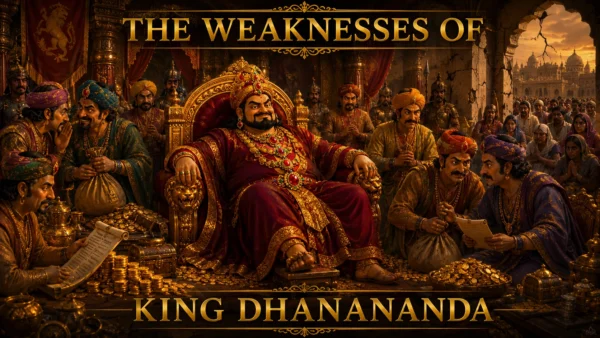
Yet for Dhanananda, this wealth was never enough.
He believed that the strength of a kingdom depended on the size of its treasury.
As a result, taxes became increasingly heavy.
Farmers were forced to surrender large portions of their harvest.
Merchants paid high duties on goods transported between cities.
Craftsmen and traders struggled to maintain their livelihoods.
Even temples and religious institutions were not always spared from royal demands for wealth.
While the palace grew richer, many villages became poorer.
Governance Through Fear
The period of Dhanananda’s rule is often remembered for the atmosphere of fear it created.
Understanding Who Was King Dhanananda of Magadha requires recognizing how fear became a central tool of his governance.
Spies were placed throughout the kingdom to monitor the activities of citizens.
These informants reported suspicious conversations, complaints about taxes, and signs of rebellion.
Because of this system, ordinary people became cautious.
Conversations stopped when royal officers approached.
Criticism of the king became dangerous.
Fear slowly spread across the kingdom.
Respect for the king no longer came from admiration.
It came from intimidation.
Cruelty as a Method of Control
Dhanananda believed that strict punishment prevented rebellion.
As a result, harsh punishments became common during his rule.
Public punishments and executions were sometimes used to discourage disobedience.
Even small acts of resistance could result in severe consequences.
The army, which should have protected the people, was often used to suppress unrest.
When villagers protested heavy taxes or questioned royal officials, soldiers were sent to restore order.
Over time, the presence of the army began to symbolize fear rather than security.
This approach to governance created stability in the short term.
But in the long term, it increased resentment among the people.
The Suffering of the People
As we explore Who Was King Dhanananda of Magadha, the suffering of the common people becomes a central part of the story.
Farmers worked hard to produce crops but lost much of their harvest to taxation.
Small traders struggled to survive under economic pressure.
Craftsmen faced declining opportunities.
Many villages experienced poverty despite living in one of the richest kingdoms of the time.
The contrast between royal luxury and public hardship became increasingly visible.
Palaces glittered with gold and precious stones.
But beyond the palace walls, ordinary people struggled with daily survival.
This imbalance slowly created frustration within the kingdom.
The Seeds of Rebellion
History often shows that oppressive rule eventually creates resistance.
The story of Who Was King Dhanananda of Magadha is a powerful example of this pattern.
Every act of cruelty planted a seed of anger.
Every unfair tax increased dissatisfaction.
Every harsh punishment deepened resentment.
At first, these emotions remained hidden.
People feared speaking openly.
But beneath the surface, dissatisfaction continued to grow.
Many citizens quietly hoped for change.
And history was preparing exactly that.
A Strategist Watching Carefully
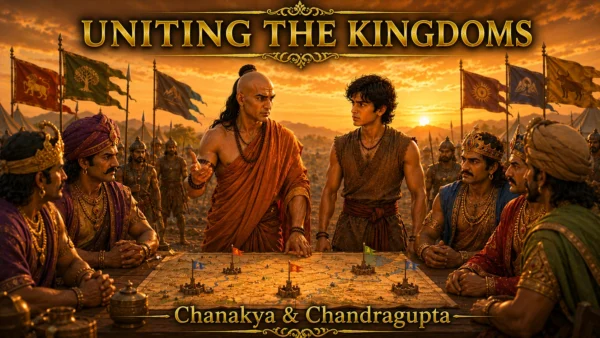
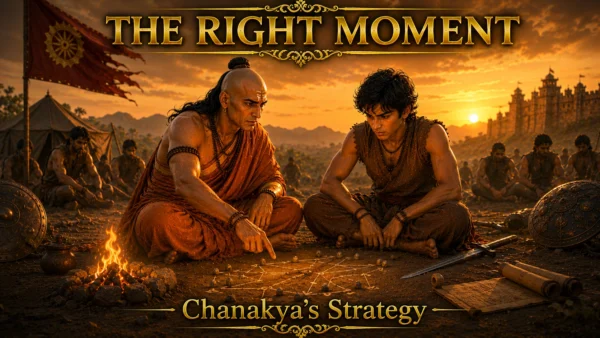
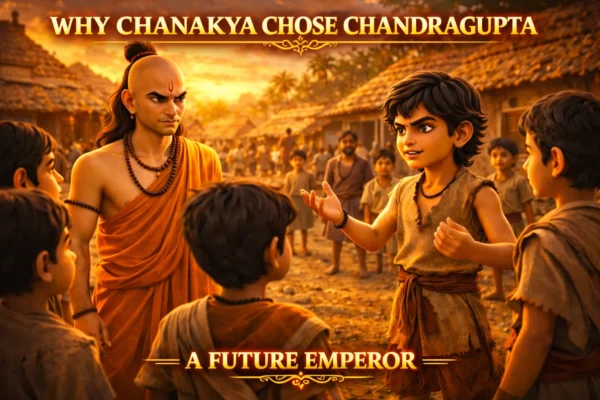
Among those who observed the situation in Magadha was a brilliant scholar and strategist named Chanakya.
Chanakya believed that true leadership required wisdom, fairness, and long-term thinking.
In his view, a kingdom should protect its citizens rather than exploit them.
As he studied the conditions in Magadha, Chanakya recognized that the kingdom’s strength was only temporary.
A system built on fear cannot remain stable forever.
Eventually, resentment leads to transformation.
This understanding would later influence the decisions that changed the course of Indian history.
The Beginning of the End
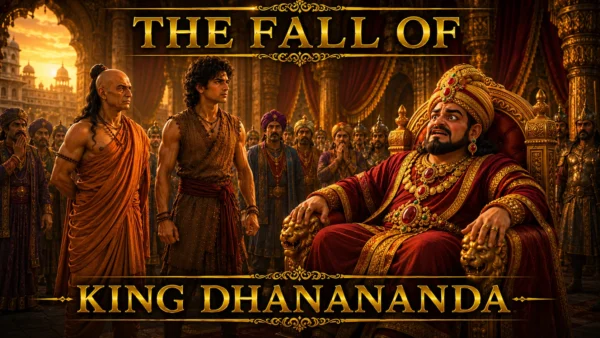
Dhanananda believed his wealth and army made him invincible.
But history often moves quietly.
Far away from the royal palace, a young boy was growing up under difficult circumstances.
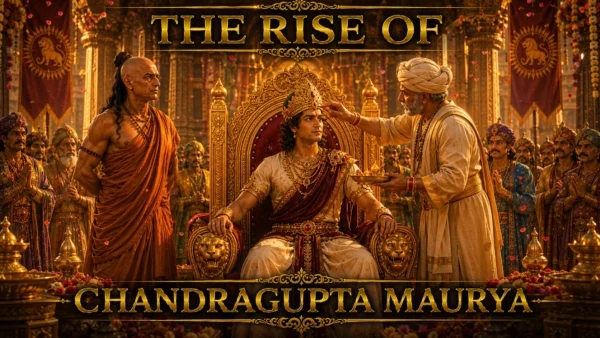
That boy was Chandragupta Maurya.
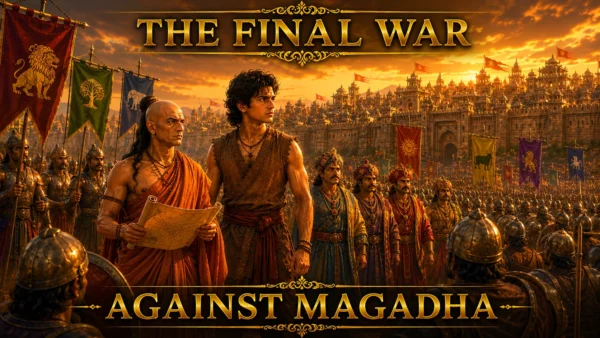
Soon, the strategist Chanakya and the young Chandragupta would meet.
Together they would challenge the power of the Nanda dynasty.
And the rule of Dhanananda would eventually come to an end.
Understanding Who Was King Dhanananda of Magadha is important because his rule unintentionally created the conditions for the rise of a new empire.
🌟 Moral: Who Was King Dhanananda of Magadha
A kingdom may be built on wealth and fear, but it survives only through justice and trust.
❓ Frequently Asked Questions About Who Was King Dhanananda of Magadha
1. Who was King Dhanananda?
King Dhanananda was the last ruler of the Nanda dynasty who governed the powerful kingdom of Magadha.
2. Why was Dhanananda considered a harsh ruler?
He imposed heavy taxes, used spies to monitor citizens, and relied on military power to suppress opposition.
3. Was Magadha powerful during Dhanananda’s rule?
Yes, Magadha was one of the richest and most powerful kingdoms of ancient India.
4. Who defeated King Dhanananda?
Chandragupta Maurya, guided by the strategist Chanakya, eventually overthrew the Nanda dynasty.
5. Why is Dhanananda important in history?
His rule created the conditions that led to the rise of the Maurya Empire.
💙 Continue the Chanakya Series
The Fear of Magadha Under King Dhanananda (Part 2)
- The Lonely Elephant and His New Friends – A Heartwarming Friendship Story with 7 Powerful Life Lessons

- The Fox and the Stork Story in english with moral – 7 Powerful Lessons About Kindness, Trickery, and Respect
- The Clever Monkey and the Greedy Crocodile Story – 7 Brilliant Lessons on Intelligence and Trust
- The Tortoise and the Hare Story with Moral | A Timeless Tale of Patience and Success
- The Sun and the Wind Story – A Timeless Moral Story for Children and Adults
- 🐦 Thirsty Crow Story in English for Kids 🌿 | Short Moral Story with Life & Money Lessons






📣 YouTube Channel Subscribe Line
👉 Subscribe to our YouTube channel for more beautiful moral stories for kids!
🔗 YouTube Channel – A Moral Stories (English)





Post Comment