The First Attack on Magadha: A Painful Lesson in Overconfidence (Part 13)
📖 When Training Met Reality
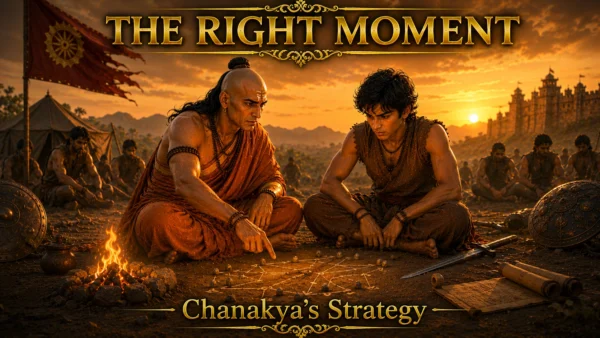
For years, Chanakya had trained Chandragupta Maurya with relentless discipline.
He had taught him patience.
He had taught him warfare.
He had taught him strategy.
And slowly, Chandragupta had begun to believe he was ready.
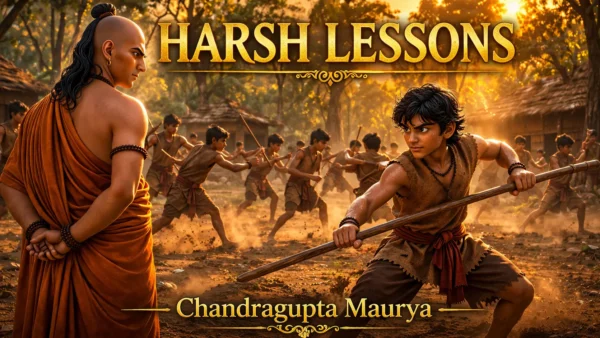
The harsh lessons had made him stronger.
The early training had made him sharper.
But knowledge learned in practice grounds is different from knowledge tested in war.
Soon, that difference would become painfully clear.
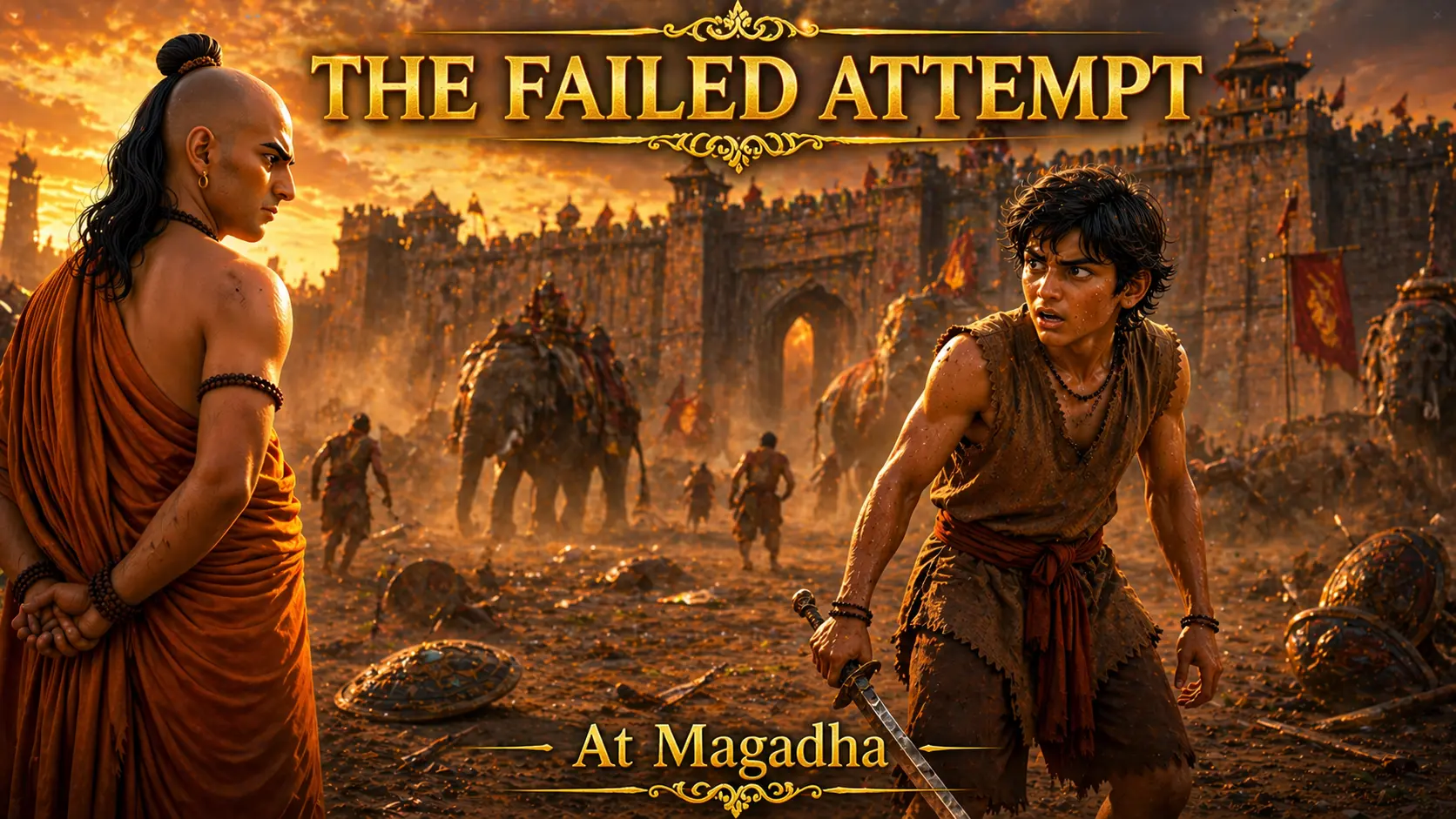
Thus began The First Attack on Magadha — a bold attempt that would end not in victory, but in humiliation.
A Young Warrior’s Rising Confidence ⚔️
After years of training, Chandragupta’s confidence had grown rapidly.
He was no longer the struggling village boy Chanakya had first discovered.
He was disciplined.
He was intelligent.
He understood military formations, attack patterns, and battlefield movement.
This progress filled him with courage.
But courage can sometimes become overconfidence.
And that is exactly what happened before The First Attack on Magadha.
Chandragupta began believing that strength and preparation alone were enough to defeat King Dhanananda.
He wanted action.
He wanted immediate results.
He wanted to prove himself.
Chanakya, however, knew that eagerness can be dangerous.
Chanakya’s Warning Was Ignored 🧠
Chanakya understood Magadha better than anyone.
He knew:
- its army was enormous,
- its treasury was full,
- its spies were active,
- and its forts were difficult to penetrate.
He repeatedly warned Chandragupta:
“Preparation is not victory. Timing creates victory.”
But youth often hears confidence louder than caution.
Chandragupta believed delay would only weaken momentum.
He felt the people were suffering under Dhanananda’s tyranny.
He felt justice demanded immediate action.
His emotions began moving faster than strategy.
And this impatience became one of the biggest causes behind The First Attack on Magadha.
The Wrong Time to Strike ⏳
Every war is won long before the first sword is raised.
Chanakya knew they still lacked:
- enough loyal soldiers,
- stable regional support,
- internal allies inside Magadha,
- and complete knowledge of enemy weak points.
But Chandragupta’s growing ambition pushed the campaign forward too early.
This was not the perfect moment.
This was a premature strike.
And history remembers The First Attack on Magadha as a classic example of wrong timing.
They moved toward Magadha with limited support and incomplete preparation.
The goal was bold.
The plan was not.
Magadha’s Power Was Still Untouched 🏰
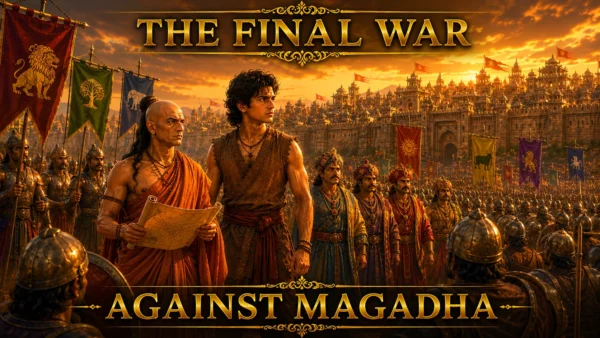
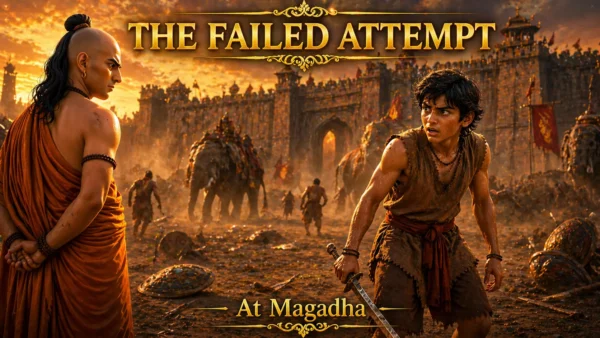
As Chandragupta’s forces approached, the reality of Magadha became visible.
Massive walls.
Trained soldiers.
War elephants.
Heavy defense.
The kingdom was far stronger than expected.
Dhanananda’s military machinery was not fragile.
It was disciplined and ready.
The attacking forces quickly realized that this was not a scattered kingdom.
This was one of the most powerful empires in ancient India.
And they had underestimated it.
This underestimation became another painful factor in The First Attack on Magadha.
The Battle Turns Against Chandragupta ⚔️
Once the clash began, the difference in strength became obvious.
Magadha’s soldiers were experienced.
Their formations were stronger.
Their supply lines were secure.
Chandragupta’s side lacked numbers and battlefield experience.
Small mistakes quickly became major setbacks.
Messages failed.
Units scattered.
Momentum disappeared.
The first enthusiasm of attack slowly turned into confusion.
Then confusion turned into retreat.
And retreat turned into defeat.
The dream of immediate victory collapsed in front of harsh reality.
The Pain of Failure 🔥
Defeat is never easy.
But first defeat is unforgettable.
For Chandragupta, The First Attack on Magadha was emotionally crushing.
He had believed he was ready.
He had imagined victory.
Instead, he was forced to witness loss.
Soldiers were injured.
Supporters were shaken.
Confidence was broken.
For the first time, he experienced the gap between training and true warfare.
This was no longer a practice lesson.
This was history teaching through pain.
Chanakya’s Silent Lesson
Interestingly, Chanakya did not explode in anger.
He did not say “I told you so.”
He remained calm.
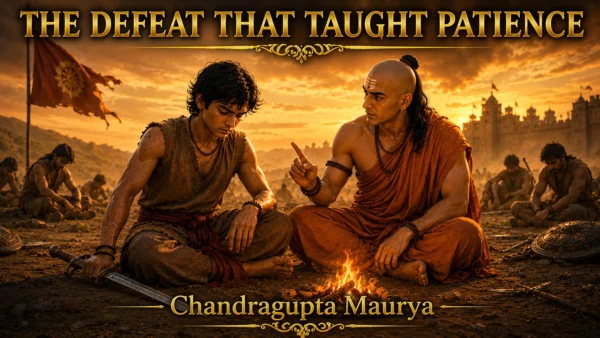
Because he knew something important:
Some lessons cannot be taught through words.
They must be learned through consequences.
This defeat became one of the greatest lessons in Chandragupta’s journey.
He finally understood:
- confidence is not strategy,
- courage is not timing,
- desire is not readiness.
And this realization changed him deeply.
Overconfidence Was Broken
Before The First Attack on Magadha, Chandragupta wanted to win quickly.
After the defeat, he wanted to understand deeply.
That difference changed everything.
His overconfidence cracked.
His impatience weakened.
His willingness to listen increased.
Sometimes failure removes the illusion of readiness.
And only then does real preparation begin.
Why This Defeat Was Necessary
History often hides a strange truth:
Some failures are more valuable than victories.
If Chandragupta had not suffered this early defeat, he might have remained reckless.
He might have continued underestimating enemies.
He might have attacked with emotion rather than calculation.
Thus, The First Attack on Magadha was not the end of ambition.
It was the correction of ambition.
A New Phase Begins
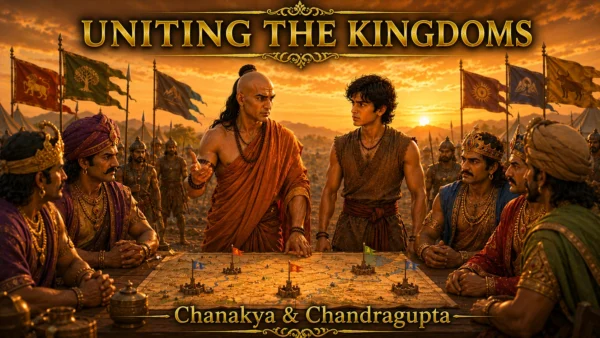
Now Chandragupta understood that defeating King Dhanananda would require:
- patience,
- alliances,
- spies,
- deeper planning,
- and perfect timing.
The first attack had failed.
But the war for Magadha was far from over.
In fact, the real strategy was only beginning.
🌟 Moral
Failure caused by overconfidence can become the strongest foundation of wisdom.
✨ Ending
The battlefield had delivered its verdict.
Courage alone was not enough.
Training alone was not enough.
To bring down Magadha, they would need something far greater.
A master plan was about to take shape.
❓ Frequently Asked Questions About The First Attack on Magadha
1. What was The First Attack on Magadha?
The First Attack on Magadha was Chandragupta Maurya’s early military attempt against Magadha that ended in defeat.
2. Why did the first attack on Magadha fail?
It failed because of overconfidence, wrong timing, limited support, and underestimating Magadha’s military strength.
3. Did Chanakya support the first attack?
Chanakya was cautious and understood that the timing was not ideal, but the defeat became a major lesson.
4. Who ruled Magadha during the first attack?
King Dhanananda ruled Magadha at that time.
5. What did Chandragupta learn from the defeat?
He learned patience, deeper planning, and the importance of timing.
6. Why is this attack important in history?
Because this failure shaped the future strategy that later helped establish the Maurya Empire.
7. What happened after the first attack on Magadha?
Chanakya and Chandragupta began rebuilding their plans with greater patience and smarter alliances.
✨ 5 Powerful Lessons from the First Attack on Magadha
- Overconfidence Can Lead to Defeat
- Timing Can Decide Victory
- Preparation Must Come Before Action
- Failure Can Become a Powerful Teacher
- Strategy Is More Powerful Than Courage Alone
📖 Continue the Chanakya Series
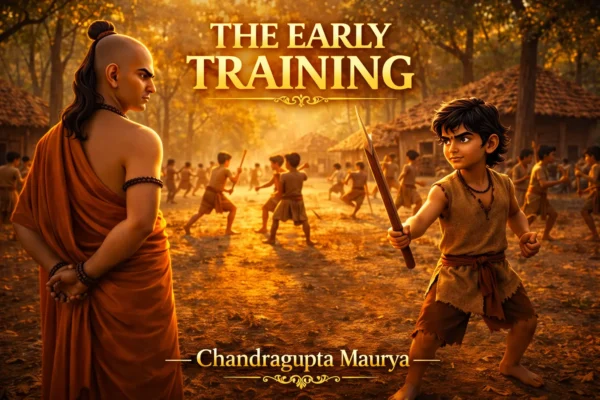
⬅ Part 11: The Early Training of Chandragupta
⬅ Part 12: Chanakya’s Harsh Lessons for a Future King
- The Puzzle That Confused the Entire Court – An Akbar Birbal Story

- King Akbar Asked for Proof of God – Birbal’s Answer Shocked Everyone
- Everyone Believed He Was Guilty… Birbal’s One Answer Changed the Verdict
- Akbar Passed Judgment in a Hurry… Birbal Made Him Listen
- The Scholar Spoke for Hours… Birbal Answered Without a Single Word
- Akbar Lost His Ring Inside the Court… No One Could Find It Until Birbal Spoke
📣 YouTube Channel Subscribe Line
👉 Subscribe to our YouTube channel for more beautiful moral stories for kids!
🔗 YouTube Channel – A Moral Stories (English)







Post Comment