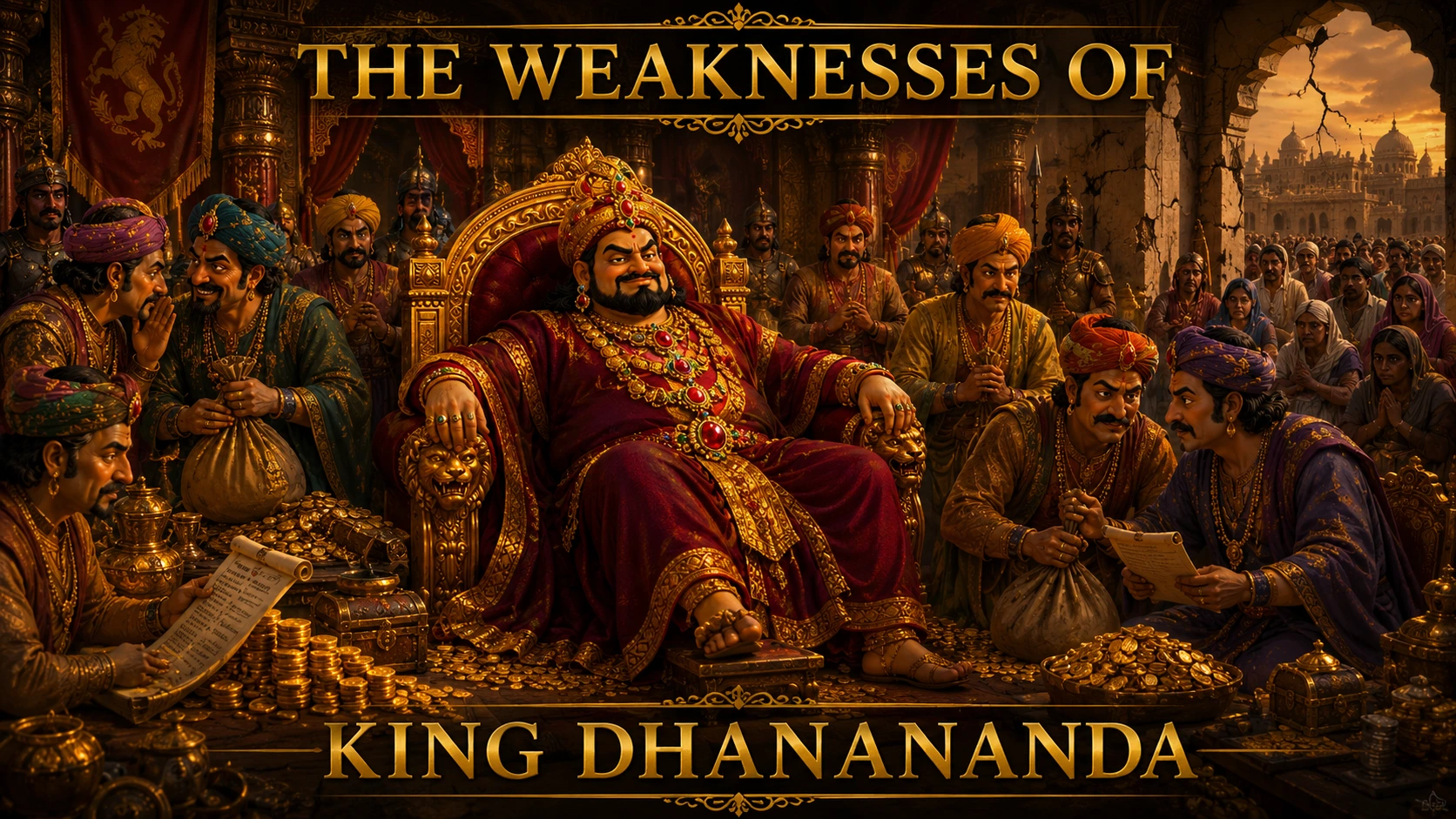
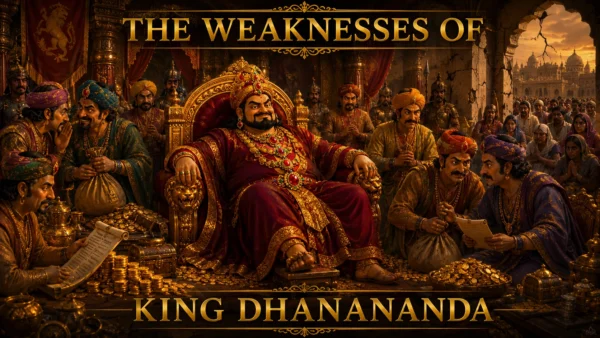
📖 The Weaknesses of King Dhanananda: The Cracks That Threatened Magadha (Part 17)
🌅 A Kingdom That Looked Invincible
From a distance, Magadha appeared stronger than ever.
Its mighty walls stood tall.
Its treasury overflowed with gold.
Its army remained one of the largest in the land.
Merchants still traveled through its roads.
Royal banners still flew proudly above palaces and forts.
To outsiders, Magadha looked untouchable.
Invincible.
Unbreakable.
Yet history teaches us an important lesson:
The greatest dangers often grow where nobody is looking.
While Chanakya and Chandragupta were quietly strengthening alliances beyond Magadha’s borders, another story was unfolding inside the kingdom itself.
A story of greed.
A story of corruption.
A story of fear.
And at the center of it all stood King Dhanananda.
This chapter explores The Weaknesses of King Dhanananda, the flaws that slowly weakened one of the most powerful kingdoms in ancient India.
👑 The King Who Had Everything
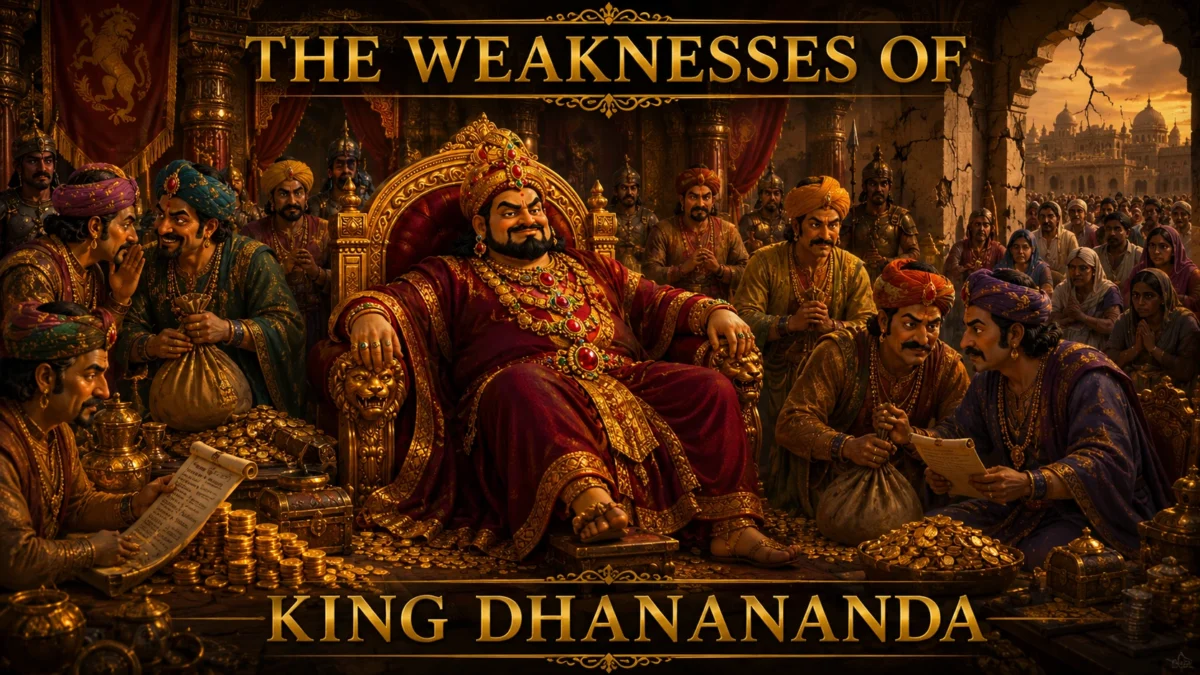
King Dhanananda possessed everything a ruler could desire.
Wealth.
Power.
Influence.
A vast army.
A magnificent capital.
Yet despite having so much, he constantly wanted more.
More gold.
More taxes.
More control.
More authority.
This endless desire would eventually become one of his greatest weaknesses.
Because a ruler who never feels satisfied often forgets the needs of the people.
And when people feel ignored, loyalty begins to fade.
💰 Weakness 1: Greed Without Limits
Among all The Weaknesses of King Dhanananda, greed was perhaps the most visible.
The royal treasury already contained enormous wealth.
Yet taxes continued increasing.
Farmers paid heavily.
Merchants paid heavily.
Craftsmen paid heavily.
Even successful traders feared royal officials.
Every season brought new demands.
Every year brought greater pressure.
The king believed that a rich treasury meant a strong kingdom.
But Chanakya understood something deeper.
A treasury built upon suffering eventually weakens the throne itself.
As taxes increased, dissatisfaction spread across Magadha.
People obeyed.
But many no longer supported the king willingly.
And that difference would matter greatly in the future.
🌾 The Suffering of the Farmers
The people who suffered most were farmers.
They worked from sunrise to sunset.
They depended on favorable weather.
They depended on healthy harvests.
Yet after months of labor, a significant portion of their produce disappeared into taxes.
Many families struggled.
Some borrowed money.
Others sold possessions.
A few abandoned their land entirely.
The villages that once felt prosperous slowly began losing hope.
And where hope disappears, resentment grows.
🏛️ Weakness 2: Corruption Inside the Kingdom
Greed created another problem.
Corruption.
When leaders focus excessively on wealth, dishonest officials often follow the same example.
Across Magadha, many administrators began abusing power.
Tax collectors demanded extra payments.
Local officials accepted bribes.
Government positions became opportunities for personal gain.
Ordinary citizens suffered most.
Justice often favored the wealthy.
The poor had little protection.
And every act of corruption weakened trust in the government.
Chanakya often said:
“Corruption is a hidden enemy that destroys kingdoms from within.”
Magadha was beginning to prove him right.
⚖️ How Corruption Spread
Corruption rarely appears overnight.
It spreads slowly.
One dishonest official influences another.
One unfair decision creates more unfair decisions.
Eventually, corruption becomes normal.
This was exactly what happened inside Magadha.
Many honest administrators became discouraged.
Many capable officials stopped speaking out.
And many citizens lost faith in authority altogether.
The kingdom still looked powerful from outside.
But internally, trust was slowly disappearing.
👁️ Weakness 3: Rule Through Fear
Another major flaw among The Weaknesses of King Dhanananda was his reliance on fear.
The king believed fear created obedience.
Spies monitored conversations.
Criticism became dangerous.
Punishments became severe.
People learned to remain silent.
At first, this strategy seemed effective.
Rebellions became rare.
Public criticism decreased.
The kingdom appeared stable.
But fear creates only temporary control.
It does not create loyalty.
It does not create respect.
And it certainly does not create love for a ruler.
🤐 Silence Is Not Loyalty
This was a mistake Dhanananda never understood.
Because people remained quiet, he assumed they supported him.
Because few openly opposed him, he believed everything was fine.
But silence is not the same as loyalty.
Many citizens obeyed because they feared punishment.
Not because they respected the king.
And when fear eventually weakens, hidden resentment often emerges.
⚔️ Weakness 4: Arrogance After Victory
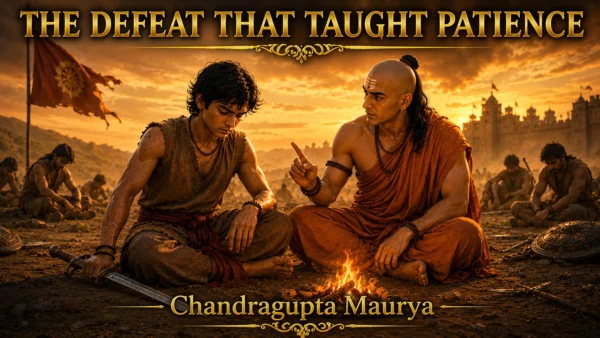
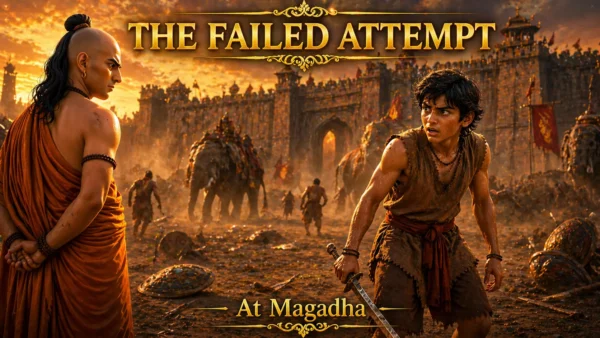
After Chandragupta’s first failed attack, Dhanananda became increasingly confident.
Too confident.
He believed Magadha had proven its superiority.
He believed Chanakya had failed.
He believed Chandragupta no longer posed a threat.
This confidence slowly transformed into arrogance.
And arrogance is dangerous.
Because arrogant leaders stop preparing.
They stop listening.
They stop improving.
Most importantly, they stop recognizing danger.
🧠 Chanakya Saw What Others Missed
While Dhanananda celebrated his apparent security, Chanakya studied the kingdom carefully.
Reports arrived from merchants.
Travelers shared observations.
Allies gathered information.
The picture became clearer every month.
Magadha’s greatest threat was not an enemy army.
Its greatest threat was its own weaknesses.
Chanakya understood that kingdoms often collapse because of internal problems long before external enemies succeed.
📢 Weakness 5: Ignoring Honest Advice
Wise rulers value honest advisors.
Dhanananda increasingly surrounded himself with people who agreed with him.
Ministers feared disagreement.
Officials avoided difficult conversations.
Truth became dangerous inside the royal court.
As a result, important problems remained hidden.
The king heard praise.
But not reality.
He heard compliments.
But not warnings.
And a ruler who only hears what he wants to hear eventually becomes disconnected from the truth.
🏰 Life Inside the Royal Court
Inside the palace, many officials learned an important lesson.
Telling the king what he wanted to hear was safer than telling the truth.
So they praised decisions.
They minimized problems.
They avoided criticism.
This created an illusion of stability.
Meanwhile, real issues continued growing.
The king became increasingly isolated from the struggles of ordinary people.
And isolation is dangerous for leadership.
❤️ Weakness 6: Losing the Loyalty of the People
Armies are important.
Treasuries are important.
Fortresses are important.
But loyalty is more important than all of them.
A ruler who loses the support of the people eventually loses everything.
Across Magadha, loyalty was weakening.
Citizens obeyed laws.
But enthusiasm disappeared.
Farmers paid taxes.
But frustration increased.
Merchants continued business.
But trust declined.
The connection between ruler and people grew weaker every year.
🌍 The Growing Contrast
At the same time, something remarkable was happening beyond Magadha.
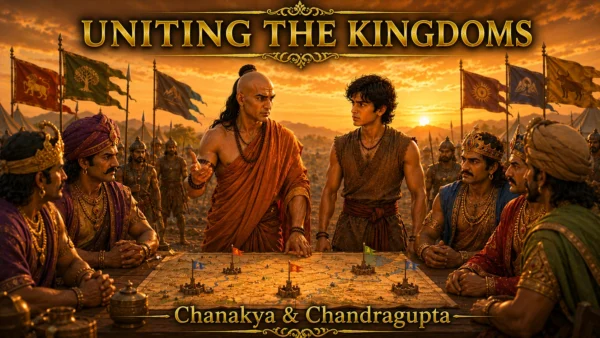
Chanakya was building alliances.
Small kingdoms were cooperating.
Leaders were joining a common cause.
Hope was growing.
Trust was increasing.
The contrast became clear.
Outside Magadha:
✔ Unity
✔ Cooperation
✔ Shared purpose
Inside Magadha:
❌ Fear
❌ Corruption
❌ Distrust
This difference would soon shape history.
🔥 Weakness 7: Underestimating Chanakya and Chandragupta
Among all The Weaknesses of King Dhanananda, this was perhaps the most dangerous.
He underestimated his opponents.
He focused on their past failure.
He ignored their current growth.
He saw only the failed attack.
He failed to see:
- expanding alliances,
- growing support,
- improved strategy,
- stronger leadership.
While Dhanananda looked backward, Chanakya planned forward.
That difference changed everything.
👑 Chandragupta Learns a Final Leadership Lesson
One evening, Chandragupta discussed these weaknesses with Chanakya.
The young leader listened carefully.
Then he asked:
“Acharya, can even powerful kings fall because of such flaws?”
Chanakya nodded.
“Every kingdom falls first in the mind of its ruler.”
The answer stayed with Chandragupta.
Because he realized leadership is not only about gaining power.
It is about using power wisely.
A ruler must remain humble.
A ruler must remain aware.
A ruler must continue listening.
Otherwise, even great empires become vulnerable.
🌟 7 Powerful The Weaknesses of King Dhanananda That Led to Magadha’s Fall
1️⃣ Greed Without Limits
2️⃣ Corruption Among Officials
3️⃣ Rule Through Fear
4️⃣ Arrogance After Success
5️⃣ Ignoring Honest Advice
6️⃣ Losing Public Loyalty
7️⃣ Underestimating Chanakya and Chandragupta
These seven flaws became the foundation of Magadha’s decline.
🎯 Leadership Lessons from King Dhanananda’s Mistakes (The Weaknesses of King Dhanananda)
✅ Wealth cannot replace trust.
✅ Fear cannot replace respect.
✅ Power cannot replace wisdom.
✅ Arrogance blinds leaders.
✅ Corruption weakens kingdoms.
✅ Loyalty must be earned.
✅ Great leaders never underestimate opponents.
🌟 Moral : The Weaknesses of King Dhanananda
A kingdom becomes strongest when its people trust their ruler, and weakest when fear and corruption replace trust.
✨ Conclusion : The Weaknesses of King Dhanananda
As another night settled over Magadha, King Dhanananda remained confident.
His treasury was still full.
His army was still powerful.
His throne still seemed secure.
But beneath the surface, cracks were spreading.
The people were losing faith.
Corruption was growing.
Fear was replacing loyalty.
And beyond Magadha’s borders, Chanakya’s alliances continued expanding.
The kingdom still looked invincible.
Yet history was already moving against it.
And soon, the final confrontation would begin.
❓ Frequently Asked Questions About The Weaknesses of King Dhanananda
1. Who Was King Dhanananda of Magadha?
King Dhanananda was the last ruler of the Nanda Dynasty and one of the most powerful kings of ancient Magadha. He ruled over a wealthy kingdom but became unpopular due to heavy taxation, greed, and fear-based governance. His rule eventually ended with the rise of Chandragupta Maurya under the guidance of Chanakya.
2. What Were the Main Weaknesses of King Dhanananda?
The main weaknesses of King Dhanananda were greed, corruption, excessive taxation, arrogance, ruling through fear, ignoring honest advice, and underestimating Chanakya and Chandragupta Maurya. These flaws gradually weakened Magadha from within.
3. Why Was King Dhanananda Unpopular Among the People?
King Dhanananda became unpopular because he imposed heavy taxes on farmers, merchants, and common citizens. Many people felt oppressed by corrupt officials and feared speaking against the king, leading to widespread dissatisfaction throughout Magadha.
4. How Did Corruption Weaken Magadha?
Corruption weakened Magadha by reducing public trust in the administration. Tax collectors and local officials abused their power for personal gain, causing injustice and resentment among the people. Over time, corruption damaged the kingdom’s stability and loyalty.
5. Why Did Chanakya Oppose King Dhanananda?
Chanakya opposed King Dhanananda because he believed the king’s rule was harmful to the people and the future of Magadha. Chanakya wanted a ruler who governed with wisdom, justice, and responsibility rather than greed and fear.
6. How Did Heavy Taxation Affect Magadha?
Heavy taxation placed a huge burden on farmers, traders, and craftsmen. Many struggled to support their families while paying increasing taxes. This economic pressure created frustration and reduced public support for King Dhanananda’s rule.
7. What Was King Dhanananda’s Biggest Mistake?
One of King Dhanananda’s biggest mistakes was underestimating Chanakya and Chandragupta Maurya. He believed their earlier failure meant they were no longer a threat, allowing them time to build alliances and strengthen their strategy.
8. How Did Fear-Based Rule Hurt Magadha?
Fear-based rule created obedience but not loyalty. While people followed laws to avoid punishment, many secretly resented the king. Over time, fear weakened the relationship between the ruler and the people, making the kingdom vulnerable.
9. What Leadership Lessons Can We Learn from King Dhanananda?
King Dhanananda’s story teaches that leaders must avoid greed, listen to honest advice, earn public trust, and remain humble. Power alone cannot sustain a kingdom if people lose faith in their ruler.
10. How Did the Weaknesses of King Dhanananda Lead to the Fall of Magadha?
The weaknesses of King Dhanananda created internal cracks within Magadha. Corruption, fear, public dissatisfaction, and arrogance weakened the kingdom, while Chanakya and Chandragupta Maurya grew stronger through alliances and strategy. These factors eventually contributed to the fall of the Nanda Dynasty.
📖 Continue the Chanakya Series
⬅ Part 15: Chanakya’s Lesson of the Right Moment
⬅ Part 16: How Chanakya United Small Kingdoms
- The Puzzle That Confused the Entire Court – An Akbar Birbal Story

- King Akbar Asked for Proof of God – Birbal’s Answer Shocked Everyone
- Everyone Believed He Was Guilty… Birbal’s One Answer Changed the Verdict
- Akbar Passed Judgment in a Hurry… Birbal Made Him Listen
- The Scholar Spoke for Hours… Birbal Answered Without a Single Word
- Akbar Lost His Ring Inside the Court… No One Could Find It Until Birbal Spoke
📣 YouTube Channel Subscribe Line
👉 Subscribe to our YouTube channel for more beautiful moral stories for kids!
🔗 YouTube Channel – A Moral Stories (English)









Post Comment