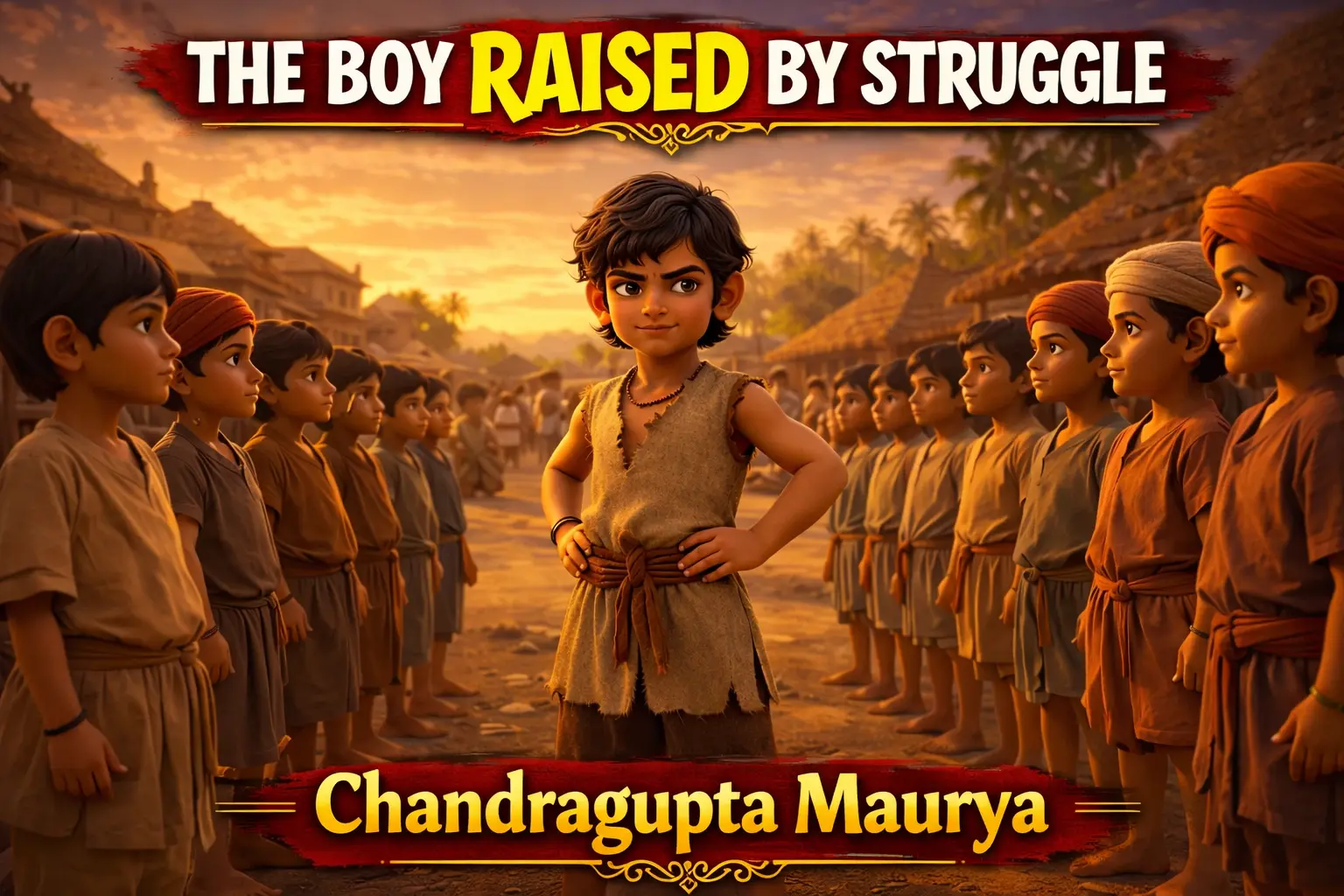
Who Was Chandragupta Maurya as a Child? The Boy Raised by Struggle (Part 4)
📖 The Untold Story of Chandragupta Maurya as a Child
History remembers kings, empires, and battles.
But long before the crown touches a ruler’s head, there is always a story of struggle.
The story of Chandragupta Maurya as a child is one such story. It is not a tale of luxury or royal privilege. Instead, it is a story of hardship, resilience, and quiet determination.
Before he became the founder of one of the most powerful empires in ancient India…
Before he defeated mighty rulers…
Before he fulfilled the vision of the great strategist Chanakya…
Chandragupta Maurya was simply a young boy trying to survive in a difficult world.
His early life did not begin in a palace.
It began in struggle.
A Childhood Without Comfort
To understand the greatness of Chandragupta Maurya, one must first understand Chandragupta Maurya as a child.
Unlike many kings who were born into royal families, Chandragupta’s childhood was marked by poverty and uncertainty.
There were no royal tutors.
There were no golden palaces.
There were no armies protecting him.
Instead, he lived among ordinary people, learning about life through direct experience.
The streets became his classroom.
He witnessed the realities of society from a very young age.
He saw hunger.
He saw injustice.
He saw how powerful rulers controlled the lives of common people.
These experiences shaped his thinking in ways that no royal education could.
Learning From the Streets
The story of Chandragupta Maurya as a child is deeply connected to the harsh lessons he learned during his early years.
Street life forces a person to become observant.
It teaches survival.
And it sharpens awareness.
Chandragupta quickly learned skills that would later help him become a powerful ruler.
He learned:
- Whom to trust
- When to speak
- When silence is more powerful than words
- How to observe people before acting
These lessons might appear simple, but they were incredibly valuable.
Great leaders do not act impulsively.
They watch carefully.
They analyze situations.
They understand people.
Chandragupta began developing these qualities at a very young age.
A Mind That Observed Everything
Many children spend their time playing without thinking about the future.
But Chandragupta Maurya as a child was different.
He observed the world around him closely.
He noticed how power worked.
He noticed how people behaved when they were afraid.
He noticed how authority influenced society.
These observations quietly shaped his understanding of leadership.
He was not loud.
He was not reckless.
He preferred to watch before acting.
This ability to observe and think strategically would later make him a perfect student for Chanakya.
But at that time, he was simply a boy trying to survive another day.
Early Signs of Leadership
One of the most fascinating aspects of Chandragupta Maurya as a child was the early signs of leadership he displayed.
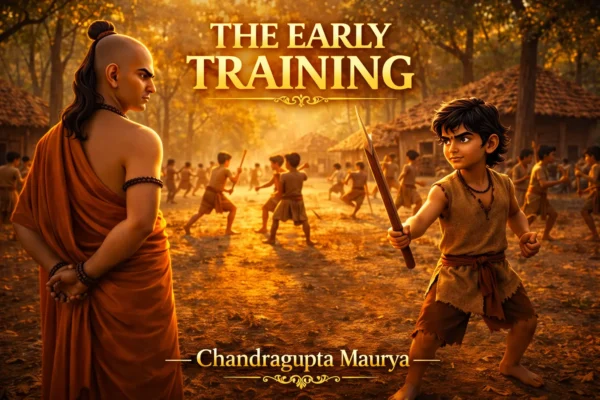
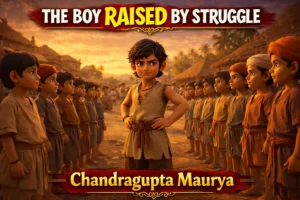
Historical traditions describe how Chandragupta often organized games with other children.
But these were not ordinary games.
He would divide the children into groups.
Some would act as soldiers.
Some would act as ministers.
Others would act as spies or messengers.
Chandragupta would take the role of the king.
What surprised many observers was how naturally other children followed him.
He did not force them.
He did not demand obedience.
People simply trusted his leadership.
This natural authority was one of the first signs of the ruler he would eventually become.
Leadership Begins With Character
Many people believe that leadership comes from power.
But the story of Chandragupta Maurya as a child shows something different.
Leadership begins with character.
Even without wealth or authority, Chandragupta possessed qualities that made people respect him.
These qualities included:
- Confidence
- Discipline
- Awareness
- Determination
These traits cannot be easily taught.
They develop through experience.
And Chandragupta’s difficult childhood provided exactly that.
The Fire Born From Hardship
Hardship can break a person.
But sometimes it creates strength.
The story of Chandragupta Maurya as a child is proof of this truth.
Every struggle he faced strengthened his resolve.
Every challenge made him more determined.
Every injustice he witnessed raised questions in his mind.
He began asking himself something powerful:
Why should power belong only to the cruel?
Why should ordinary people suffer under unfair rulers?
These questions planted the seeds of ambition.
Not selfish ambition.
But the ambition to change the system.
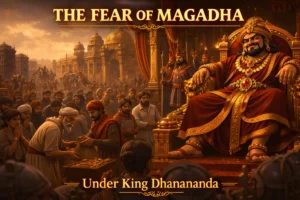
The Kingdom of Magadha
During Chandragupta’s childhood, the powerful kingdom of Magadha was ruled by King Dhanananda.
Magadha was wealthy.
Its armies were strong.
Its treasury was full.
But many people believed the kingdom was governed with greed and corruption.
Heavy taxes and harsh administration created resentment among common citizens.
Chandragupta witnessed this reality growing up.
These experiences shaped his views about power and justice.
They also prepared him for the role he would eventually play in changing the political landscape of India.
Destiny Quietly Approaches
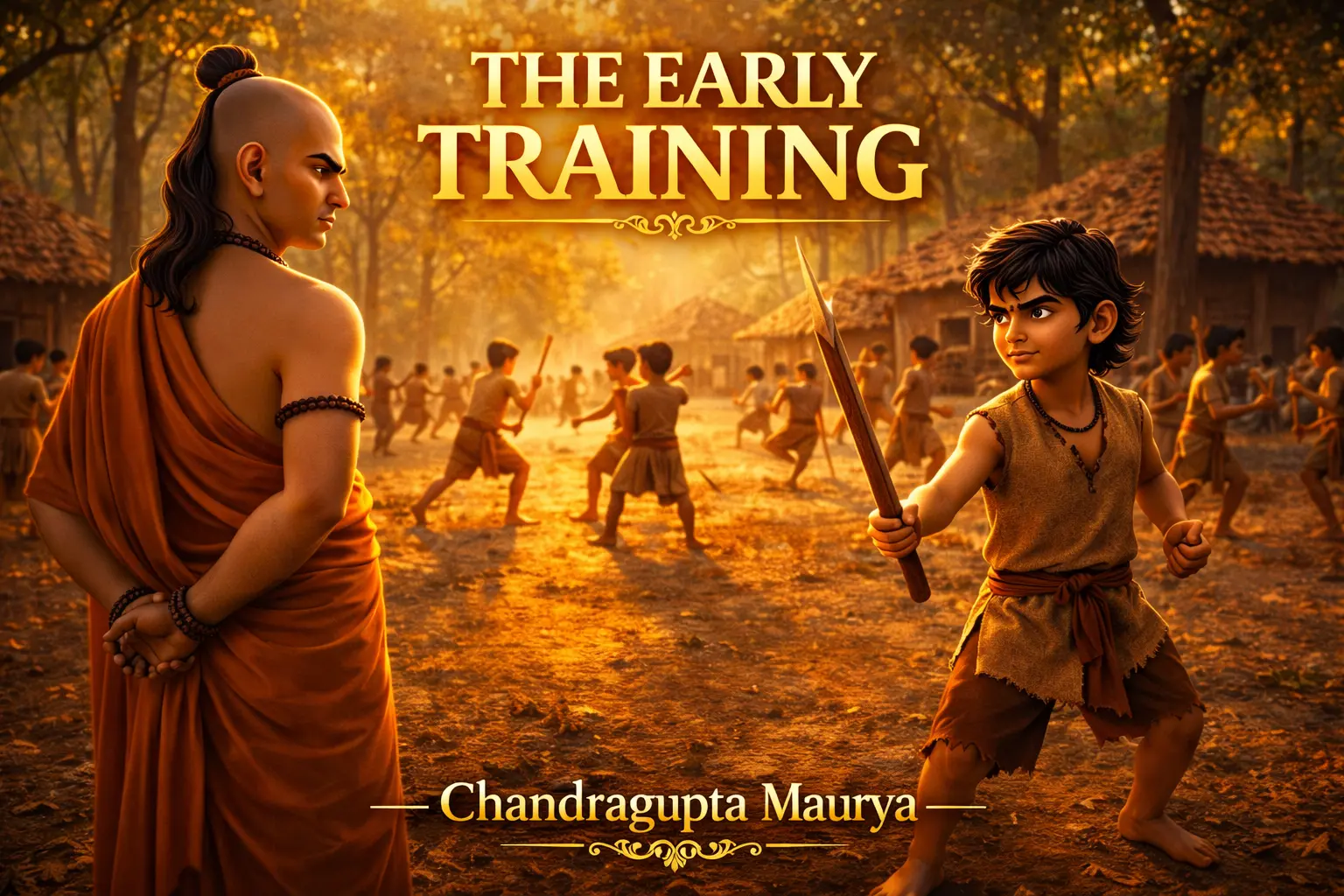
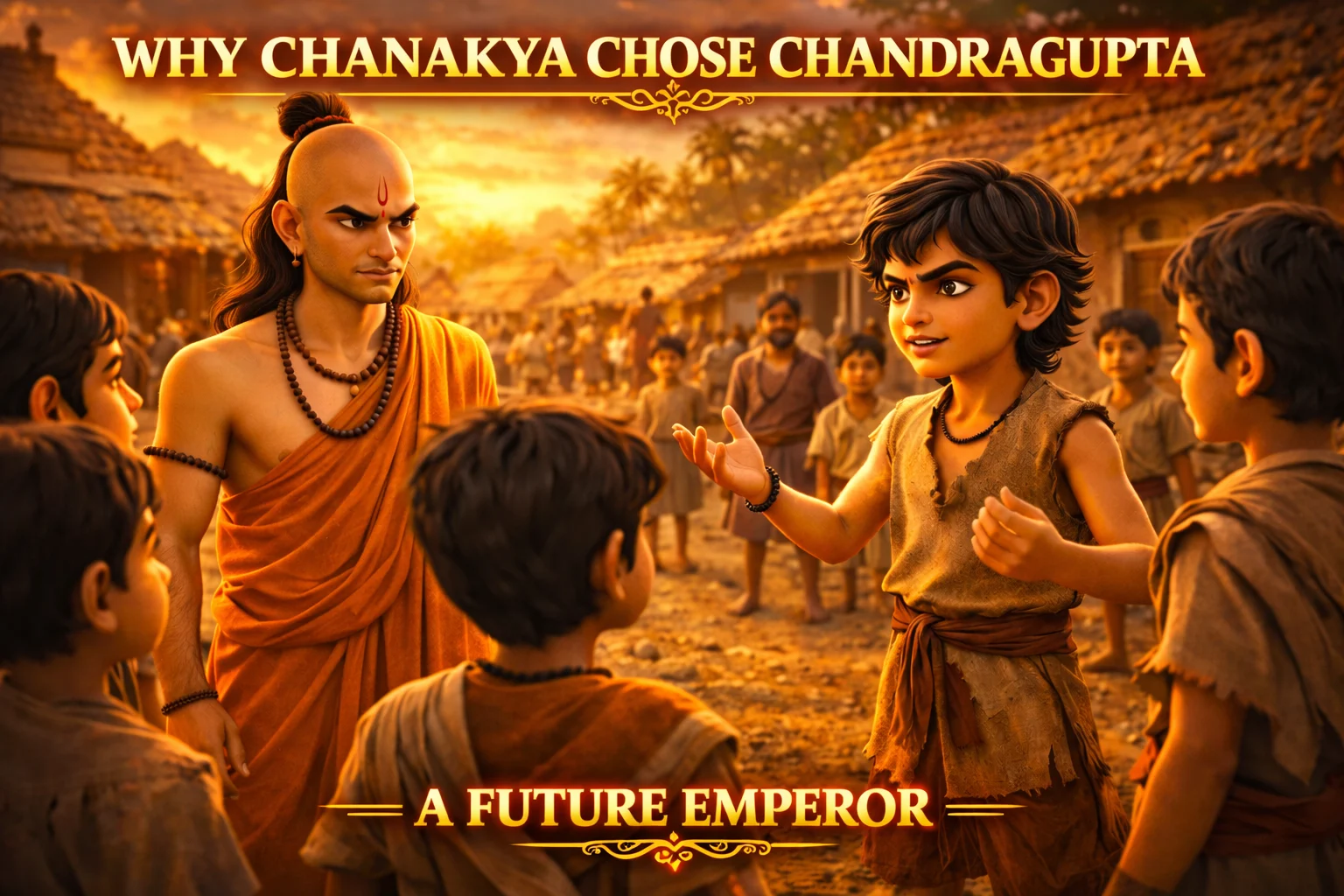
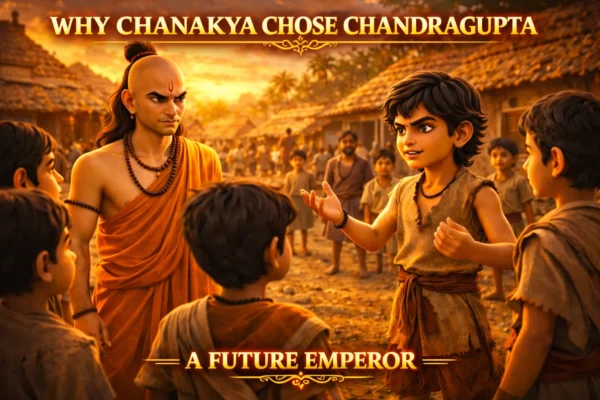
While Chandragupta was growing up in hardship, another powerful mind was observing the world carefully.
That mind belonged to Chanakya.
Chanakya was searching for someone capable of challenging powerful rulers.
He needed a leader who possessed courage, intelligence, and determination.
At that time, he had not yet found such a person.
But destiny was already preparing someone.
A young boy whose character was being shaped by struggle.
That boy was Chandragupta.
Soon their paths would cross.
And history would change forever.
Why Chandragupta’s Childhood Matters
Understanding Chandragupta Maurya as a child helps us understand the ruler he eventually became.
His early struggles gave him qualities that many privileged princes never develop.
He understood the problems of ordinary people.
He understood hardship.
He understood injustice.
These experiences made him a ruler who valued discipline, strategy, and strong governance.
Without those early struggles, the Maurya Empire might never have been created.
🌟 Moral: Chandragupta Maurya as a Child
Great leaders are not raised in comfort.
They are shaped by struggle.
✨ Ending
A poor boy was learning to lead in silence.
And somewhere in the land, a brilliant strategist was searching for the right student.
Very soon, destiny would bring them together.
❓ Frequently Asked Questions About Chandragupta Maurya as a Child
1. Who was Chandragupta Maurya?
Chandragupta Maurya was the founder of the Maurya Empire and one of the most powerful rulers in ancient Indian history.
2. What was Chandragupta Maurya’s childhood like?
Chandragupta Maurya’s childhood was marked by poverty and struggle, which helped shape his leadership skills and determination.
3. Who mentored Chandragupta Maurya?
The ancient strategist Chanakya mentored Chandragupta and helped him build the Maurya Empire.
4. Why is Chandragupta Maurya important in history?
Chandragupta Maurya established the Maurya Empire, one of the largest empires in ancient India.
5. How did Chandragupta Maurya become a leader?
His early struggles, natural leadership skills, and mentorship from Chanakya helped him become a powerful ruler.
📖 Continue the Chanakya Series
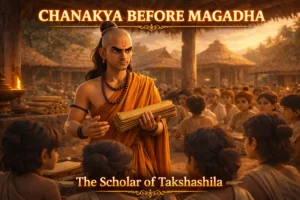
➡ Part 3: Who Was Chanakya Before Magadha?
➡ Part 5: Chandragupta’s Mother and His Early Struggles
- The Lonely Elephant and His New Friends – A Heartwarming Friendship Story with 7 Powerful Life Lessons

- The Fox and the Stork Story in english with moral – 7 Powerful Lessons About Kindness, Trickery, and Respect
- The Clever Monkey and the Greedy Crocodile Story – 7 Brilliant Lessons on Intelligence and Trust
- The Tortoise and the Hare Story with Moral | A Timeless Tale of Patience and Success
- The Sun and the Wind Story – A Timeless Moral Story for Children and Adults
- 🐦 Thirsty Crow Story in English for Kids 🌿 | Short Moral Story with Life & Money Lessons






📣 YouTube Channel Subscribe Line
👉 Subscribe to our YouTube channel for more beautiful moral stories for kids!
🔗 YouTube Channel – A Moral Stories (English)



Post Comment