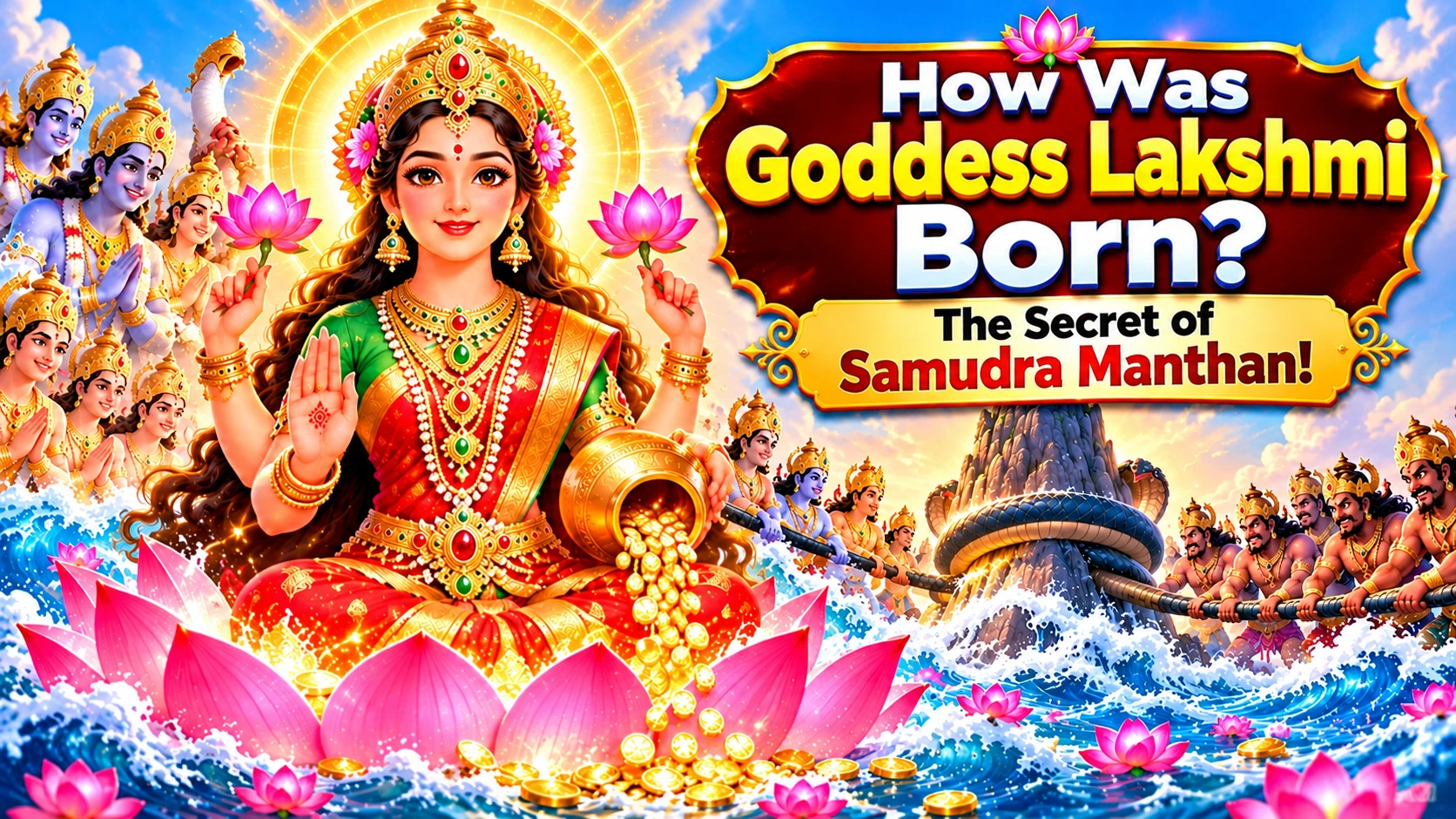
🌺 Introduction: How Was Goddess Lakshmi Born?
In Hinduism, Goddess Lakshmi is worshipped as the goddess of wealth, prosperity, fortune, happiness, and abundance. Devotees pray for her blessings so that their homes remain filled with peace, happiness, and prosperity. During the auspicious festival of Diwali, Goddess Lakshmi and Lord Ganesha are especially worshipped.
But have you ever wondered, how was Goddess Lakshmi born? How did she emerge from the ocean, and why did she choose Lord Vishnu as her divine consort?
The answers to these questions are found in the famous mythological story of Samudra Manthan, also known as the Churning of the Ocean of Milk.
According to the ancient story, the gods and demons were constantly fighting for power. There came a time when the gods began losing their divine energy, strength, and prosperity. Meanwhile, the power of the demons continued to increase. The gods became worried about their situation.
Lord Vishnu advised them to churn the Kshira Sagara, the Ocean of Milk. The gods and demons joined forces and began churning the ocean using the mighty Mount Mandarachal as the churning rod and the serpent Vasuki as the rope.
During this great churning, a deadly poison called Halahala emerged. Lord Shiva consumed the poison to protect the universe and held it in his throat. After this, several divine objects and treasures began emerging from the ocean.
It was during this same Samudra Manthan that Goddess Lakshmi appeared in her divine form. Her arrival filled the three worlds with joy and celebration.
In this article, we will discover how Goddess Lakshmi was born, explore the complete Samudra Manthan story, and understand the religious significance behind her divine appearance.
🌺 The Complete Story of Samudra Manthan (Full Story)
🌺 How Did the Gods Lose Their Power and Prosperity?
Long ago, Lord Indra ruled the heavenly kingdom of Swarg Lok. Under his leadership, the gods protected the celestial world.
One day, Lord Indra was travelling on his elephant, Airavata. On his way, he met the great sage Durvasa.
Sage Durvasa presented Indra with a divine flower garland. It was considered extremely sacred and auspicious.
However, Indra did not show the garland the respect it deserved. He placed it on the head of his elephant, Airavata. The elephant shook its trunk and dropped the garland to the ground.
Sage Durvasa became extremely angry. He felt that Indra had insulted the sacred gift.
🌺 The Amazing Story of Sage Durvasa’s Curse
Angered by Indra’s behaviour, Sage Durvasa cursed him, declaring that his divine glory, prosperity, and splendour would disappear.
Gradually, the effects of the curse became visible. The gods began losing their divine radiance, and the prosperity of Swarg Lok was affected.
Meanwhile, the demons became increasingly powerful. They attacked the gods and defeated them.
The gods became deeply worried. They could not understand how they would regain their lost strength and restore the prosperity of their heavenly kingdom.
🌺 Why Did the Gods Seek Help from Lord Vishnu?
After being defeated by the demons and facing great difficulties, the gods approached Lord Brahma for help.
Lord Brahma listened to their problem and advised them to seek the guidance of Lord Vishnu.
The gods then approached Lord Vishnu and explained their difficult situation.
Lord Indra humbly prayed:
“O Lord! The prosperity of our heavenly kingdom is disappearing. The demons are becoming stronger. Please protect us and show us a way to overcome this crisis.”
Lord Vishnu asked the gods to remain patient. He explained that a special plan would be needed to overcome their difficulties.
🌺 Why Did Lord Vishnu Suggest Churning the Ocean?
Lord Vishnu told the gods that Amrit, the divine nectar of immortality, was hidden in the Kshira Sagara. By churning the ocean, they could obtain this nectar.
Drinking Amrit would help the gods regain their strength and divine power.
However, churning the enormous ocean was a very difficult task. The gods could not accomplish it alone.
Therefore, Lord Vishnu advised them to join forces with the demons and churn the ocean together.
He explained that the demons could be persuaded to participate by offering them the opportunity to obtain Amrit.
In this way, Lord Vishnu devised a plan that would make the great Samudra Manthan possible.
🌺 The Agreement Between the Gods and Demons
Following Lord Vishnu’s advice, the gods approached Bali, the king of the demons.
They explained that the Ocean of Milk contained many divine treasures and Amrit. If the gods and demons worked together to churn the ocean, they could obtain several extraordinary treasures.
The demons were eager to obtain Amrit, so they agreed to participate in the plan.
Thus, an agreement was made between the gods and demons to perform Samudra Manthan.
Both sides began preparing for the great churning.
🌺 The Role of Mount Mandarachal and Vasuki
A huge churning rod and a long rope were required to churn the ocean.
Mount Mandarachal was chosen as the churning rod, while Vasuki, the king of serpents, was used as the rope.
The gods and demons held the two ends of Vasuki.
According to one popular version of the story, the gods held the tail of Vasuki, while the demons held his head.
Both sides began pulling in opposite directions. Mount Mandarachal started rotating, and the great Samudra Manthan began.
However, after some time, a major problem arose. Mount Mandarachal began sinking into the ocean.
The gods and demons now faced another challenge.
🌺 Why Did Lord Vishnu Take the Kurma Avatar?
When Mount Mandarachal began sinking into the ocean, Lord Vishnu took the form of a gigantic tortoise.
This divine form of Lord Vishnu is known as the Kurma Avatar.
He entered the ocean and supported Mount Mandarachal on his enormous back.
As a result, the mountain became stable, and the churning of the ocean could continue.
Lord Vishnu made the great Samudra Manthan possible through his Kurma Avatar.
This incident teaches us that whenever the universe faces a crisis, the Lord takes different forms to protect creation and help those who seek his guidance.
🌺 How Did Halahala Poison Emerge from the Ocean?
The gods and demons continued churning the ocean with all their strength.
Mount Mandarachal rotated, creating tremendous movement in the Kshira Sagara. After some time, a deadly poison emerged from the ocean. It was known as Halahala or Kalakuta poison.
The poison was so dangerous that it threatened all three worlds.
Both the gods and demons became frightened. They could not understand how to protect the universe from this deadly substance.
Therefore, the gods approached Lord Shiva for help.
🌺 How Did Lord Shiva Become Neelkanth?
Lord Shiva listened to the prayers of the gods and decided to protect the universe.
He took the deadly Halahala poison that had emerged during Samudra Manthan and drank it.
When Goddess Parvati saw this, she held Lord Shiva by the throat so that the poison would not move further into his body.
As a result, the poison remained in his throat, turning it blue.
From that moment, Lord Shiva became famous as Neelkanth, meaning the one with a blue throat.
Because of Lord Shiva’s great sacrifice, the universe was saved from a terrible crisis.
After this event, the gods and demons resumed the churning of the ocean.
🌺 The Divine Appearance of Goddess Lakshmi During Samudra Manthan
After the Halahala poison incident, the churning of the ocean continued.
One by one, several divine objects and treasures began emerging from the ocean. The Srimad Bhagavata Purana describes treasures and beings such as Surabhi the divine cow, Uchchaihshravas the celestial horse, Airavata the elephant, the Kaustubha jewel, the Parijata tree, and celestial Apsaras.
After these events, Goddess Lakshmi appeared in her divine form from the Ocean of Milk.
Her appearance was extraordinarily beautiful, radiant, and divine. Her arrival filled the surroundings with joy and celebration.
The gods, sages, Gandharvas, and other celestial beings welcomed Goddess Lakshmi with great respect.
They offered prayers and performed her ceremonial abhisheka. The Bhagavata Purana also describes the bringing of sacred water from different directions for her ceremonial bathing.
Goddess Lakshmi looked magnificent, holding a lotus flower.
All the gods were delighted by her divine appearance. It seemed as though prosperity, auspiciousness, and happiness had entered the entire universe.
This is the famous mythological event associated with the divine appearance of Goddess Lakshmi during Samudra Manthan.
🌺 Why Did Goddess Lakshmi Choose Lord Vishnu as Her Consort?
After the divine appearance of Goddess Lakshmi, the question arose: whom would she choose as her life partner?
Many powerful and great gods were present. Everyone was captivated by her divine beauty.
Goddess Lakshmi observed them and considered their qualities.
Finally, she chose Lord Vishnu as her divine consort.
Lord Vishnu is the preserver of the universe. He protects Dharma and maintains balance throughout creation.
Goddess Lakshmi recognised his divine qualities and accepted him as her consort.
According to the description in the Srimad Bhagavata Purana, Goddess Lakshmi took her place on Lord Vishnu’s chest. Lord Vishnu welcomed her into his heart.
In this way, the divine relationship between Goddess Lakshmi and Lord Vishnu became a symbol of preservation, prosperity, and auspiciousness.
🌺 The Story of Dhanvantari and the Pot of Amrit
Even after the appearance of Goddess Lakshmi, the churning of the ocean continued.
After some time, Lord Dhanvantari emerged from the ocean carrying a pot filled with Amrit.
Lord Dhanvantari is worshipped as the divine physician and the god associated with Ayurveda and healing.
When the demons saw the pot of Amrit, they rushed forward to obtain it. They seized the pot from Dhanvantari.
A dispute then began between the gods and demons over who would receive the nectar.
The gods became worried and sought help from Lord Vishnu.
🌺 Why Did Lord Vishnu Take the Mohini Avatar?
A conflict also arose among the demons over possession of the pot of Amrit.
At that moment, Lord Vishnu took the beautiful form of a woman known as Mohini.
The demons became fascinated by Mohini’s divine beauty. They requested her to distribute the Amrit fairly among them.
Mohini asked everyone to sit in separate rows.
Then, according to her plan, she served the Amrit to the gods.
In this way, the gods received the divine nectar and regained their strength.
The Samudra Manthan story teaches us about Lord Vishnu’s wisdom and his role in maintaining the balance of the universe.
🌺 What Were the 14 Ratnas of Samudra Manthan?
The story of Samudra Manthan describes the emergence of many divine objects and treasures from the Ocean of Milk.
In popular Hindu traditions, these treasures are collectively known as the 14 Ratnas of Samudra Manthan. However, different Puranas do not always give exactly the same list or order of appearance.
The eighth Skandha, Chapters 7 and 8, of the Srimad Bhagavata Mahapurana describes Halahala poison, Surabhi, Uchchaihshravas, Airavata, Kaustubha, Parijata, Apsaras, Goddess Lakshmi, Varuni, and Dhanvantari, among other events.
The following 14 items are commonly included in popular traditional lists associated with Samudra Manthan.
🌺 1. Halahala Poison
The deadly poison that emerged during Samudra Manthan was known as Halahala. Lord Shiva held it in his throat to protect the universe.
🌺 2. Kamadhenu Cow
Kamadhenu is regarded as a divine wish-fulfilling cow. In Hindu traditions, she is associated with sacredness, prosperity, and the performance of Yajnas.
🌺 3. Uchchaihshravas Horse
Uchchaihshravas was a divine white horse. According to a popular mythological account, it was obtained by the demon king Bali.
🌺 4. Airavata Elephant
Airavata was a divine elephant. He is known as the celestial vehicle of Lord Indra.
🌺 5. Kaustubha Jewel
The Kaustubha was an extraordinary and precious divine jewel. Lord Vishnu wore it on his chest.
🌺 6. Kalpavriksha Tree
The Kalpavriksha is considered a divine wish-fulfilling tree. It symbolises prosperity and auspiciousness.
🌺 7. Apsaras
According to the mythological account, beautiful celestial Apsaras emerged from the ocean. They were renowned for their dance and musical talents.
🌺 8. Goddess Lakshmi
The divine appearance of Goddess Lakshmi is considered one of the most significant events of Samudra Manthan. She is worshipped as the goddess of wealth, prosperity, and abundance.
🌺 9. Varuni Devi
Varuni is associated with Lord Varuna and is connected with divine intoxicating drink in traditional accounts. Her appearance is mentioned in the Samudra Manthan story.
🌺 10. Chandra, the Moon
The appearance of Chandra, the Moon, is also included in popular mythological traditions associated with Samudra Manthan. Lord Shiva is often depicted with the Moon adorning his head.
🌺 11. Parijata Tree
The Parijata is considered a divine and fragrant tree. It is traditionally associated with the beauty and splendour of the heavenly world.
🌺 12. Shankha, the Conch
The conch is considered highly auspicious in Hinduism. Blowing a Shankha is a traditional part of worship, Aarti, and religious ceremonies.
🌺 13. Lord Dhanvantari
Lord Dhanvantari emerged from the ocean carrying the pot of Amrit. He is worshipped as the divine physician and the god associated with Ayurveda.
🌺 14. The Pot of Amrit
The pot of Amrit contained the divine nectar of immortality, which the gods and demons had sought through the great churning of the ocean.
Important Note: The list above represents a popular traditional understanding of the 14 Ratnas. It should not be treated as the only definitive list or as an exact sequence found in the Srimad Bhagavata Purana. Different Puranas and traditions vary in the items they include and their order.
🌟 7 Amazing Secrets Behind the Appearance of Goddess Lakshmi
Goddess Lakshmi is not merely associated with wealth and material prosperity. Every symbol connected with her divine form carries a special spiritual meaning.
🌺 Secret 1: Why Is Goddess Lakshmi Called the Daughter of the Ocean?
Goddess Lakshmi appeared during the churning of the Ocean of Milk. For this reason, she is described as a goddess who emerged from the ocean.
In popular Hindu traditions, she is also referred to as the daughter of the ocean.
However, many Vaishnava traditions regard Goddess Lakshmi as eternal and as the everlasting divine energy of Lord Vishnu.
🌺 Secret 2: Why Is Goddess Lakshmi Shown Sitting on a Lotus?
The lotus flower grows in muddy water, yet its beauty and purity remain untouched.
Goddess Lakshmi sitting on a lotus symbolises purity, beauty, and the ability to maintain good qualities while living in the material world.
🌺 Secret 3: Why Is Goddess Lakshmi Also Called Shri?
The word Shri is associated with auspiciousness, beauty, honour, splendour, and prosperity.
That is why Goddess Lakshmi is also known by names such as Shridevi and Shri Mahalakshmi.
🌺 Secret 4: Why Is Goddess Lakshmi Worshipped as the Goddess of Wealth and Prosperity?
Goddess Lakshmi is not associated with wealth alone. She also represents food, good fortune, happiness, abundance, and auspiciousness.
Devotees worship her and pray for happiness and prosperity in their lives.
🌺 Secret 5: What Is the Relationship Between Goddess Lakshmi and Lord Vishnu?
Goddess Lakshmi is regarded as the divine consort of Lord Vishnu and his eternal divine energy.
Lord Vishnu preserves the universe, while Goddess Lakshmi represents prosperity, auspiciousness, and abundance.
🌺 Secret 6: Why Is Goddess Lakshmi Shown with Gold Coins Flowing from Her Hands?
In many images of Goddess Lakshmi, gold coins are shown flowing from her hands.
This symbol represents wealth, generosity, charity, and prosperity. It also reminds us that wealth should not be used only for personal happiness but also to help others.
🌺 Secret 7: Why Is Goddess Lakshmi Invited into Homes During Diwali?
Worshipping Goddess Lakshmi is an important tradition during Diwali. People clean their homes, light oil lamps, and pray to her for happiness and prosperity.
The festival symbolises light, auspiciousness, and new beginnings.
🌺 The Eight Forms of Goddess Lakshmi and Their Significance (Ashtalakshmi)
In certain Hindu devotional traditions, the eight principal forms of Goddess Lakshmi are collectively known as Ashtalakshmi. Each form represents a different kind of prosperity in life.
🌺 1. Adi Lakshmi
Adi Lakshmi is regarded as the primordial and divine form of Goddess Lakshmi. She represents spiritual peace and the foundation of life.
🌺 2. Dhana Lakshmi
Dhana Lakshmi is worshipped as the goddess of financial prosperity, wealth, and abundance.
🌺 3. Dhanya Lakshmi
Dhanya Lakshmi represents food, grains, nourishment, and agricultural prosperity.
🌺 4. Gaja Lakshmi
Gaja Lakshmi is associated with royal prosperity, honour, dignity, and splendour.
🌺 5. Santana Lakshmi
Santana Lakshmi represents family happiness, children, and the well-being of the family.
🌺 6. Veera Lakshmi
Veera Lakshmi symbolises courage, strength, and the ability to face difficult situations.
🌺 7. Vijaya Lakshmi
Vijaya Lakshmi represents success, victory, and the determination to achieve one’s goals.
🌺 8. Vidya Lakshmi
Vidya Lakshmi represents knowledge, education, wisdom, and learning.
These eight forms remind us that true prosperity does not come from wealth alone. Knowledge, health, courage, family, and good values are also important forms of abundance.
🪔 Why Is Goddess Lakshmi Worshipped on Diwali?
Diwali is one of the most important festivals in Hinduism. On this day, people light oil lamps, create colourful Rangoli designs, and worship Goddess Lakshmi and Lord Ganesha.
Lakshmi Puja is performed during Diwali to pray for happiness, prosperity, good fortune, and auspiciousness in the home.
🪔 What Is the Connection Between Samudra Manthan and Diwali?
Many religious traditions connect the divine appearance of Goddess Lakshmi during Samudra Manthan with the celebration of Diwali.
This is one of the reasons why Goddess Lakshmi is worshipped with special devotion during the festival.
However, Diwali is also associated with Lord Rama’s return to Ayodhya, Lord Krishna’s victory over Narakasura, and several other regional religious traditions.
🪔 The Belief About Goddess Lakshmi’s Arrival During Diwali
According to a popular belief, Goddess Lakshmi visits homes that are clean and illuminated on the night of Diwali.
Because of this belief, people clean and decorate their homes, light oil lamps, and prepare for Lakshmi Puja.
🪔 Religious and Spiritual Significance of Lakshmi Puja
Lakshmi Puja does not simply teach us to wish for wealth. It also inspires us to use our wealth wisely and responsibly.
Honesty, hard work, charity, service, and good deeds help bring genuine prosperity into life.
🪔 What Is the Significance of Lighting Lamps at Home?
A lamp is considered a symbol of light and knowledge.
Just as a small lamp removes darkness, knowledge and positive thoughts help remove negativity from our lives.
🌟 7 Life Lessons from the How Was Goddess Lakshmi Born & Samudra Manthan Story
The Samudra Manthan story is not just an ancient mythological event. It also contains many valuable lessons that can help us live better lives.
🌟 1. Patience and Hard Work Can Help Us Achieve Difficult Goals
The gods and demons had to work continuously during Samudra Manthan.
This teaches us that patience and consistent effort are necessary to achieve any major goal.
🌟 2. Cooperation Is Important for Success
The gods could not churn the ocean on their own. They needed the cooperation of the demons.
This teaches us that working together and accepting help from others can sometimes be necessary to accomplish difficult tasks.
🌟 3. Do Not Be Afraid of Difficulties
During Samudra Manthan, Halahala poison emerged before the Amrit.
This teaches us that difficulties may appear on the path to success. We should not become discouraged or give up our efforts because of them.
🌟 4. Understand the Importance of Sacrifice and Service
Lord Shiva held the poison in his throat to protect the universe.
His action teaches us the importance of sacrifice, compassion, and working for the welfare of others.
🌟 5. Always Stay Away from Arrogance
The story of Sage Durvasa and Indra teaches us that we should remain humble even after gaining power, success, or a high position.
🌟 6. Good Values Are as Important as Wealth
The worship of Goddess Lakshmi reminds us that wealth becomes truly meaningful when it is used for good and worthwhile purposes.
🌟 7. True Prosperity Comes from Good Deeds
Being wealthy is not the only measure of prosperity. Family love, good health, knowledge, peace, and the desire to help others are also valuable forms of wealth.
👨👩👧👦 Fun Activities for Kids (How Was Goddess Lakshmi Born & Samudra Manthan Story)
After reading this mythological story, children can enjoy the following activities to improve their knowledge and creativity.
🎨 Activity 1 – Write the Names of the Treasures from Samudra Manthan
Ask children to write the names of at least five divine objects or treasures that emerged during Samudra Manthan.
🎨 Activity 2 – Draw a Beautiful Picture of Goddess Lakshmi
Children can draw a picture of Goddess Lakshmi. They can include beautiful symbols such as a lotus flower, crown, jewellery, and oil lamps.
🎨 Activity 3 – True or False Quiz
- Mount Mandarachal was used during Samudra Manthan. (True)
- Lord Vishnu took the Kurma Avatar. (True)
- Lord Brahma drank the Halahala poison. (False)
- Goddess Lakshmi appeared during Samudra Manthan. (True)
- Lord Shiva is known as Neelkanth. (True)
🎨 Activity 4 – Questions for Kids
- Why was Samudra Manthan performed?
- Who was Vasuki?
- Which avatar did Lord Vishnu take?
- Who held the Halahala poison?
- Whom did Goddess Lakshmi choose as her divine consort?
🎨 Activity 5 – What Did You Learn from the Story?
Ask children which lesson they liked most in the Samudra Manthan story and how they can follow that lesson in their daily lives.
❓ 10 Important FAQs About Goddess Lakshmi and Samudra Manthan (How Was Goddess Lakshmi Born)
1. How Was Goddess Lakshmi Born?
According to Hindu mythology, Goddess Lakshmi appeared in her divine form from the Kshira Sagara during Samudra Manthan. She is worshipped as the goddess of wealth, prosperity, happiness, and abundance. In several religious traditions, she is also regarded as an eternal and everlasting divine power.
2. How Did Goddess Lakshmi Emerge from the Ocean?
The gods and demons churned the Ocean of Milk to obtain Amrit. During this great churning, several divine objects emerged, including Goddess Lakshmi. The gods and sages offered prayers and performed her ceremonial abhisheka.
3. Why Was Samudra Manthan Performed?
After Sage Durvasa’s curse, the gods began losing their divine energy and prosperity. To regain their strength, the gods and demons churned the ocean to obtain Amrit, following Lord Vishnu’s advice.
4. How Many Ratnas Emerged from Samudra Manthan?
According to popular Hindu tradition, 14 Ratnas emerged from Samudra Manthan. These include Goddess Lakshmi, Airavata, Uchchaihshravas, the Kaustubha jewel, and the pot of Amrit. Different Puranas may vary in their lists and order.
5. What Emerged First During Samudra Manthan?
One of the major early events described during the churning of the ocean was the emergence of Halahala or Kalakuta poison. Lord Shiva held this poison in his throat to protect the universe.
6. Why Did Goddess Lakshmi Choose Lord Vishnu as Her Consort?
According to the mythological story, Goddess Lakshmi chose Lord Vishnu because of his divine qualities and his role as the preserver of the universe. The Srimad Bhagavata Purana describes her taking her place on Lord Vishnu’s chest.
7. Is Goddess Lakshmi the Daughter of the Ocean?
Because Goddess Lakshmi appeared during Samudra Manthan, popular traditions sometimes describe her as the daughter of the ocean. However, many religious traditions regard her as eternal and as the everlasting divine energy of Lord Vishnu.
8. On Which Date Was Goddess Lakshmi Born?
Some religious traditions connect the appearance of Goddess Lakshmi during Samudra Manthan with Diwali. The date and beliefs associated with her appearance may vary across different traditions.
9. Why Is Goddess Lakshmi Worshipped During Diwali?
Goddess Lakshmi is worshipped during Diwali to pray for happiness, prosperity, good fortune, and auspiciousness in the home. People light oil lamps and welcome her with devotion.
10. What Do We Learn from the Samudra Manthan Story?
The Samudra Manthan story teaches us the importance of patience, hard work, cooperation, sacrifice, and humility. It reminds us that continuous effort and determination can help us overcome difficulties.
🌸 The Spiritual Message of This Mythological Story
The story of Goddess Lakshmi’s appearance during Samudra Manthan gives us a beautiful message about life.
Just as Halahala poison emerged before the divine treasures during the churning of the ocean, we may also have to face difficulties before achieving success in life.
We should remain patient during challenging situations and continue moving towards our goals.
Goddess Lakshmi sitting on a lotus teaches us that even while living in the material world, we should maintain purity in our thoughts, behaviour, and actions.
The sacrifice of Lord Shiva, the guidance of Lord Vishnu, and the divine appearance of Goddess Lakshmi make this story even more inspiring.
The true meaning of worshipping Goddess Lakshmi is not simply asking for wealth. It is also about adopting honesty, kindness, hard work, service, and contentment in our lives.
🌸 Conclusion: The Divine Appearance of Goddess Lakshmi (how was Goddess Lakshmi born)
The Samudra Manthan story is one of the most beautiful and inspiring mythological stories in Hinduism. It describes the conflict between the gods and demons, Lord Vishnu’s Kurma Avatar, Lord Shiva’s sacrifice, and the divine appearance of Goddess Lakshmi.
Now you know how Goddess Lakshmi was born and how she appeared in her divine form during the churning of the Ocean of Milk.
The story of Goddess Lakshmi choosing Lord Vishnu as her divine consort represents the beautiful connection between Dharma, preservation, and prosperity.
This ancient tale teaches us that true prosperity does not come from wealth alone. It also comes from good deeds, humility, patience, knowledge, and the willingness to help others.
This Diwali, let us pray to Goddess Lakshmi not only for wealth and abundance but also for happiness, peace, good health, and wisdom for our families.
Jai Mata Lakshmi! 🙏
🔗 You may also like
👉 Read more inspiring stories:
👉 The Neem Tree and the Brave Animals Moral Story: 7 Brave Animals Who Saved Their Home
👉 A Grandfather’s Powerful Secret: The Two Wolves Story with Moral That Can Change Your Life
👉 Horse and Donkey Short Story About Helping Others for Kids (With Moral)
👉 Read more Hindu God stories:
👉 Little Hanuman and the Sun God
👉 Why Lord Hanuman Is Called Chiranjivi?
👉 Why Lord Vishnu Took Matsya Avatar
👉 Dashavatara Story for Kids in English
👉 Secret Behind Ravana’s 10 Heads
- The Rise of Chandragupta Maurya: The Birth of the Maurya Empire (Part 20)

- The Fall of King Dhanananda: The End of Tyranny in Magadha (Part 19)
- The Final War Against Magadha: The Battle That Changed Indian History (Part 18)
- The Weaknesses of King Dhanananda: The Cracks That Threatened Magadha (Part 17)
- How Chanakya United Small Kingdoms: The Alliance That Challenged Magadha (Part 16)
- Chanakya’s Lesson of the Right Moment: The Wisdom That Changed Chandragupta Forever (Part 15)
📣 YouTube Channel Subscribe Line
👉 Subscribe to our YouTube channel for more beautiful moral stories for kids!
🔗 YouTube Channel – A Moral Stories (English)
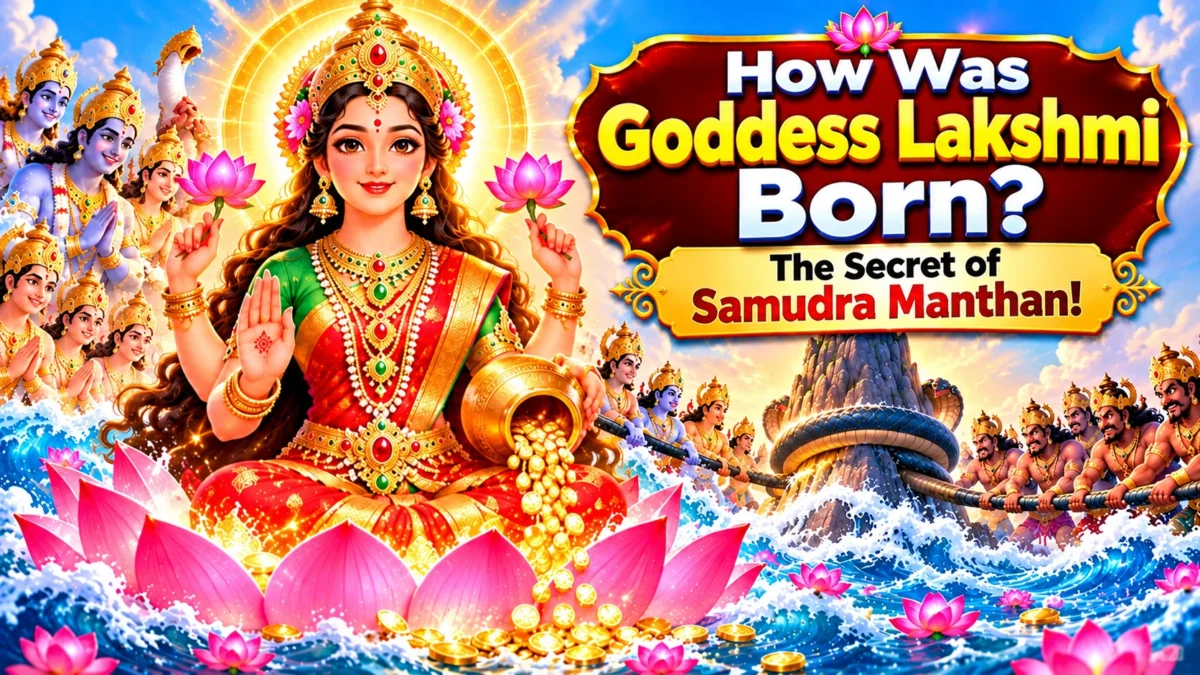
Table of Contents

Post Comment